
News writer, Interviewer

Is now the best time in history to be a lottery player? The data says yes, and players know it.
Bigger jackpots. Better odds. New games built for a phone screen. The lottery isn't just surviving a gambling boom; it's thriving inside one. Here's why I think this is the moment to pay attention.
The competition got fierce
Twenty-five years ago, gaming was simple. Casino gambling meant a trip to Las Vegas or Atlantic City. Sports betting was illegal almost everywhere. The lottery had the field to itself.
That's gone.
Since 2010, states have opened more than 1,000 new casinos. Massachusetts had zero commercial casinos in 2011. By 2019, it had the Encore Boston Harbor: a $2.6 billion resort with 2,700 slot machines and 200 table games. Maryland and Virginia built their own gaming palaces soon after.
Then came sports betting. In 2018, the Supreme Court struck down the federal ban on it. Today, it's legal in 39 states. In 2025 alone, Americans wagered over $166 billion on sports. Add another $44 billion from prediction markets like Kalshi and Polymarket, and the new competition for gaming dollars tops $237 billion.
So why hasn't the lottery lost ground? Because it stopped standing still, and that's exactly what makes this such a good moment to be a player.
Bigger jackpots, better odds
State lotteries modernized fast. In 2026, the Multi-State Lottery Association doubled its national game lineup.
Millionaire for Life pays winners $1 million a year for life, and its odds are thirteen times better than Powerball's. Powerball X's and O's leans into NFL fandom: players pick eight team logos instead of numbers, with weekly drawings and Super Bowl trips up for grabs.
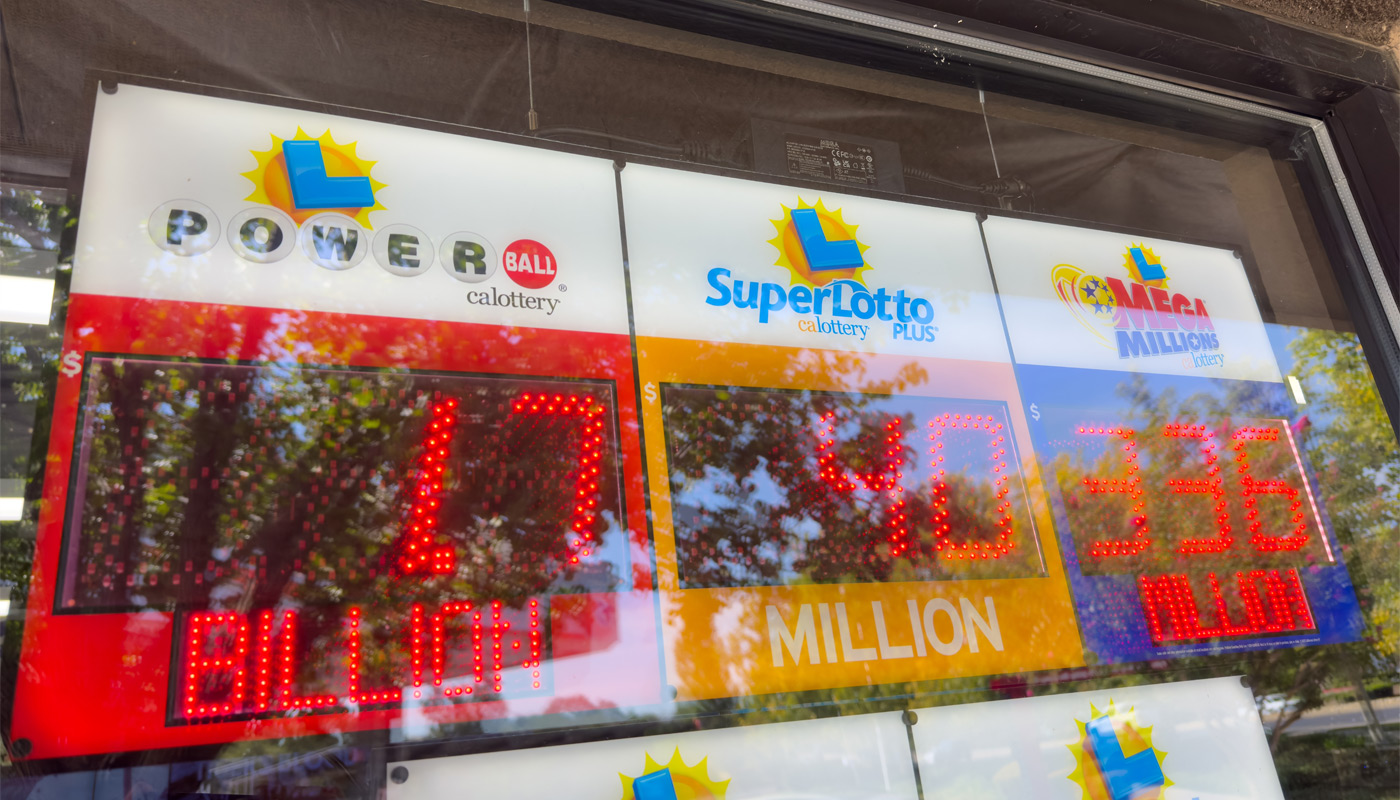
The classics got upgrades, too. Powerball added a third weekly drawing and expanded into the UK. Mega Millions raised its starting jackpot from $20 million to $50 million, bumped its smallest prize from $2 to $10, and improved the odds by trimming its Mega Ball pool from 25 numbers to 24.
Scratch tickets are the real revenue engine
Draw games make headlines. Scratch-offs make money. Americans spend twice as much on instant-win tickets as they do on drawings.
States noticed, and they went big. Florida's top scratch prize jumped from $10 million in 2015 to $25 million by 2022. Texas launched the first $100 scratch ticket in U.S. history. It became the state's best-selling ticket ever. California debuted its first $15 million scratch-off. Across the board, lotteries are paying out more and improving the odds on their top games.
Going digital didn't hurt retail. It grew the pie
Nearly 40% of state lotteries now offer some form of online play, and 30 states plus D.C. and Puerto Rico let players buy tickets or play games from their phones.
Tom Metzger, CEO of Lotto.com, has watched this play out in all 11 states where his platform operates. His finding is consistent: retail sales grow wherever digital lottery launches.
The reason is simple. Ninety-five percent of Lotto.com's customers come from Google, Facebook, and digital ads. They don't come from foot traffic at gas stations. Most had never bought a lottery ticket before. They're younger, wealthier, and value convenience over habit. Digital platforms aren't stealing retail customers. They're creating new ones, and some of those new players end up walking into a convenience store for the first time.
The house takes security seriously
None of this works without trust in the numbers. Lottery organizations guard against tampering with layered protocols: multiple ball sets, pre- and post-drawing weight checks, locked vaults, and, in states like Oregon, law enforcement supervision of drawings.
Machine manufacturers build for integrity from the ground up. SmartPlay, which handles every part of production in-house, from cabinet building to programming, designs each machine around a lottery's specific requirements. Its newest Solution Controller adds RFID tracking, passcodes, and access logs to monitor every component in real time. Even so, the company is deliberate about how far it pushes new technology, wary of losing the mechanical draw players still expect to see.
The standard for online safeguards
Security isn’t the only thing that technology advances. Online play fortifies responsible habits.
When Massachusetts launched its statewide lottery app and website, it built in real guardrails. Players set deposit and play limits at registration. Raising a limit requires a mandatory 48-hour wait, a built-in pause against impulsive decisions. A session timer nudges players every 30 minutes. Cool-off periods run from 24 hours to six months, and players can link to PlayBreak, the state's self-exclusion program, for breaks as long as a lifetime. Logging in requires multi-factor authentication, and accounts work on one device at a time.
Why the lottery still wins
Casinos are glamorous. Sports betting is fast-growing. Prediction markets are novel. None of them beat the lottery on three fronts: habit, convenience, and simplicity.
Decades of players have bought tickets since the 1980s. Over 10,000 retailers sell tickets nationwide. This is more than any casino footprint could match. And unlike point spreads, parlays, or blackjack strategy, playing the lottery takes no special knowledge. Pick numbers or scratch a ticket.
The verdict
Total lottery ticket sales grew 17% over the last five years — a gain of nearly $14 billion — even as competitors exploded around it. The data suggests something counterintuitive: sports betting and casino gaming aren't stealing lottery players. They're pulling in an entirely different crowd.
Bigger jackpots. Better odds. New digital access. Real security. Put it all together, and I don't think it's a close call. The lottery has never been better positioned than it is right now. If you've been waiting for a sign, this is it.
As always, play responsibly.
Lottery numerology predictions
Every week, we bring you the most up-to-date astrological forecasts for all signs of the zodiac.