
News writer; Opinion columnist

The Encore Boston Harbor is the type of casino mega-resort that once existed only in Las Vegas. Opened in 2019 at a cost of $2.6 billion, it features 15 restaurants, a luxury spa, a 3,000-seat theater, and a casino with over 210,000 square feet of gaming space, including more than 2,700 slot machines and almost 200 table games.
In 2011, Massachusetts had no commercial casino industry. By 2019, the state wasn’t just opening small establishments; it was building gaming palaces. And it wasn’t alone. In 2016, Maryland opened the MGM National Harbor, which included a five-star hotel and 125,000 square feet of casino space, and in 2024, Caesars opened its latest flagship property, Caesars Virginia, in Danville, VA.
In less than a decade, three states that once had no large-scale casino gaming opened some of the most luxurious casino resorts in the country. From slot machines to sports betting to prediction markets, Americans have never had more ways to spend their gaming dollars.
So how are lotteries staying strong in the face of increased competition? Are they wilting under the pressure, or have lottery officials found ways to innovate and maintain their market share in a competitive environment?
Increased competition
Twenty-five years ago, gaming options for most people were both simple and scarce.
Casino gaming meant traveling to Las Vegas, Atlantic City, or a few scattered Native American reservations. Sports betting was illegal everywhere except in Nevada, where sportsbooks were legal, and all wagering had to be done in person. However, almost every state had a lottery, and they thrived in an era when there was almost no other meaningful competition.
But as states sought to grow their revenue without raising taxes, increasing gaming options became more politically viable.
Beginning in 2010, there was a significant expansion in land-based casinos throughout the country, and several states licensed new casinos for the first time. Between 2010 and 2016, Maryland opened five brand new casinos, and in 2012, Ohio opened seven new Racinos (horse-track-and-casino hybrids) and four additional casinos.
Over the last few years, more than 1,000 new casinos have opened across the country, with several in states such as Massachusetts and New York that previously had none.
Competition for the gaming dollar grew even more intense in 2018, when the Supreme Court ended the national prohibition on sports betting by striking down the Professional and Amateur Sports Protection Act (PASPA), the federal regulation that had effectively banned sports betting outside of Nevada.
Without PASPA, several states quickly moved to legalize and regulate sports betting, which is now legal in 39 states, with 30 offering online sports gaming. This market quickly took off, and in 2025, gamblers wagered over $166 billion on sports alone.
Finally, in 2020, prediction markets, such as Kalshi and Polymarket, which effectively allowed people to wager on almost anything, grew in popularity and facilitated an additional $44 billion in wagering in 2025.
All told, these new betting entities saw at least $237 billion in gaming, with the majority of that in online sports betting.
New games and bigger jackpots
In the face of so many new and popular gaming options, lottery officials understood they needed to modernize their own games to stay relevant.
For years, Powerball and Mega Millions were the only multi-state drawing games available to most players. However, in 2026, the Multi-State Lottery Association (MUSL) doubled the number of national games it offers.
Millionaire for Life was released in the winter of 2026. The game’s top prize offers players $1 million a year for the rest of their lives, and a second-tier prize of $100,000 a year for the life of the winner.
One of the game's most intriguing features is its much better odds, than those of other multi-state games. The odds of winning the Millionaire for Life jackpot are 1:22.9 million, which is thirteen times better than Powerball.
Powerball X’s and O’s, launching in the fall of 2026, hopes to leverage the popularity of the NFL. Instead of picking numbers, players must select eight different NFL logos. Drawings are held every Sunday, and players who pick all of the correct teams win a rolling jackpot that starts at $1 million. Players who don’t win can enter a second-chance drawing for NFL-related prizes, including NFL Store credit and a trip to the Super Bowl.
In addition to the new games, MUSL also made some important changes to its classics.
Powerball went from two weekly drawings to three and expanded to the UK, adding millions of new players and creating the opportunity for faster-growing jackpots.
Mega Millions underwent even more changes. The game’s starting jackpot increased from $20 million to $50 million, and the game’s smallest prize went up from $2 to $10.
MUSL also slightly increased the odds of winning by going from 25 Mega Balls to 24, and added a 2X-10X multiplier to increase the value of secondary prizes, which are now worth up to $10 million.
Bigger scratch-off jackpots
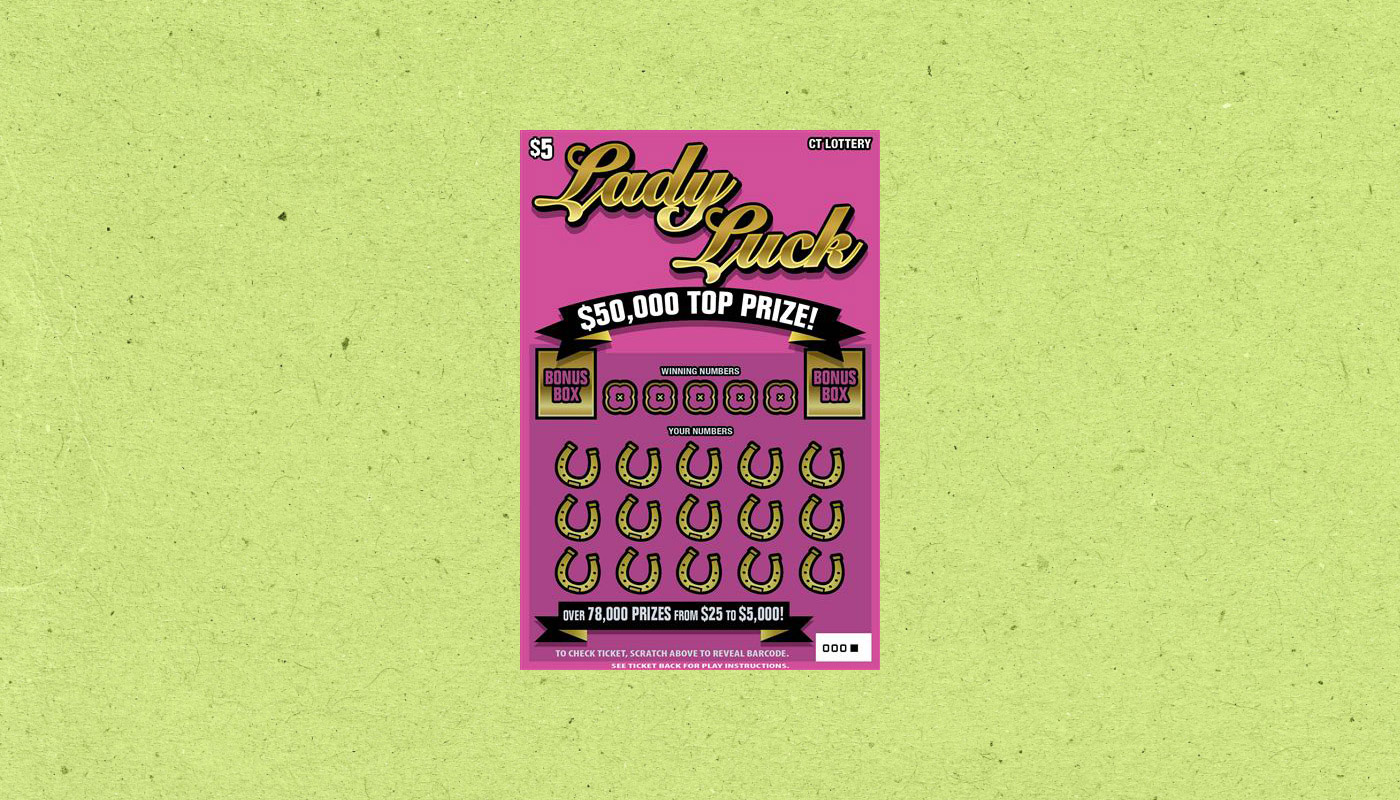
While drawing games with massive jackpots get the headlines, it's actually scratch-off tickets that are the main revenue generator for most lotteries.
Americans spend twice as much on instant-win tickets as on draw games, and many state lottery organizations have introduced significant changes to these games over the last decade by supersizing their jackpots.
In 2015, Florida’s biggest instant win prize was $10 million. However, in 2022, the jackpot more than doubled, and the most valuable tickets contained a top prize of $25 million. Not to be outdone, in 2022, Texas upped its top prize on the $20 Million Supreme ticket, which was the first scratch ticket in US lottery history to cost players $100. Interestingly, despite the high price, players loved the new high-dollar ticket, and Supreme became the best-selling ticket in the state, generating hundreds of millions in sales.
While Texas and Florida led the pack, other states also upped their top prizes, including California, which offered its first-ever scratch-off with a $15 million jackpot.
To make these games even more enticing, lotteries are paying out a higher percentage of their ticket sales revenues and increasing the odds of winning their top games.
Go high tech
Bigger prizes, better odds and more games all helped the lottery, but there was another area where it was crucial for lotteries to join the digital age: technology.
From work to banking to ordering a pizza, most Americans live their lives through their phones, and between sports betting and prediction markets, most of them can game on them as well.
That’s why some state lotteries have adapted a simple motto: if you can’t beat ‘em, join ‘em.
In January 2014, Illinois became the first state to allow players to purchase lottery tickets by phone, but they were not the last. Online lottery purchases quickly spread to states including Georgia, Kentucky, and Virginia, and by 2026, almost 40% of US state lotteries offered some type of online play.
Additionally, some states that don’t offer ticket sales through their apps do allow players to use courier services.
A courier allows a player to order a ticket over the phone, similar to ordering a pizza, and the service will send someone to buy the ticket for them at a physical retailer.
To date, 30 states, as well as Washington, DC and Puerto Rico, allow players to buy tickets or play games on their phones.
Beyond buying traditional lottery games such as Powerball or Mega Millions, some state lottery apps added a new type of game known as eInstants.
In a traditional lottery, players must wait for the drawing, but eInstant games reveal whether a ticket is a winner immediately and allow players to play again.
Additionally, beyond giving players more options for buying tickets, states can use ads to send targeted notifications, enroll players in loyalty programs, and provide a convenient way to enter second-chance drawings with qualifying tickets.
Convenience & simplicity
While state lottery officials have made a number of savvy moves to make their game more competitive, there are certain advantages that will always hold for the lottery and help keep it competitive with other gaming options.
It’s a habit.
Most states have had fully operating lotteries since the 80s, meaning that some players have spent decades playing lottery games. Once people have established habits, it's tough to change them even if new options are available.
It’s convenient
From convenience stores to courier services, lottery tickets are available almost everywhere. No matter how glamorous or high-tech a casino is, you still have to travel to get there, and in addition to your gaming expenses, you may have to pay for parking, drinks, food, and even a room if you’re staying longer than a few hours.
However, anyone with $2 in their pocket can walk into almost any 7-11, gas station, or convenience store and pick up a lottery game. Experts estimate that there are over 10,000 lottery retailers spread across the country.
It’s easy
While app-based sports betting is more convenient than driving to a casino, it’s also a more complicated game to play. Players need a working knowledge of point spreads, as well as dozens of variables that can affect a game's odds.
Parlays, over/under betting, and daily fantasy give players more options to play, but they also require an understanding of players, teams, coaches, and statistics to give yourself the best chance of winning.
Similarly, blackjack, craps, and roulette each have their own rules that can be daunting for amateur players.
The lottery, on the other hand, is as simple as quick-picking a half dozen numbers or uncovering a ticket. No special knowledge required.
The future of the lottery
Studying lottery and gaming revenue data tells an interesting story. First, non-lottery gaming has grown by hundreds of billions of dollars over the last few years. However, lottery gaming revenue has also continued to grow alongside it.
In the last five years, total ticket sales for lottery games have increased by 17%, a gain of almost $14 billion.
This would seem to indicate that, rather than cannibalizing lottery ticket sales, sports betting, casino gaming, and prediction markets are appealing to players who might not have played the lottery in the first place.
In other words, someone who loves to play blackjack may not have any interest in Powerball. Similarly, sports bettors may be far more engaged with parlays and over/unders than they are with instant-win tickets.
New technology, bigger jackpots, and better odds are all working together to keep the lottery going strong into the future.
Lottery numerology predictions
Every week, we bring you the most up-to-date astrological forecasts for all signs of the zodiac.