
News writer; Opinion columnist

In 1974, the scratch-off ticket market was worth just a few thousand dollars. Today, Americans spend about $62 billion a year on instant win lottery tickets, representing almost two-thirds of the total lottery ticket market.
However, before scratch tickets became America’s favorite way to play, they almost went extinct. Small prizes and low odds led most players to pass on these little pieces of cardboard until one big idea and a little math turned them into a juggernaut.
This is how scratch-off tickets went from an almost forgotten and discontinued product to one of America’s most popular gaming options.
Instant win almost loses
Instant win tickets were once small potatoes in the lottery industry. While draw games offered the biggest prizes, scratch-offs were almost a novelty. A cheap way to play, but without the kind of million-dollar payoff that most players dream about.
Massachusetts introduced the first legal scratch-off ticket in 1974. It cost a dollar to play, and the top prize was $10,000. And it flopped.
The first scratch-off tickets weren’t very popular, and sales were so low that lottery officials considered giving up on the idea of instant-win tickets entirely.
However, they decided to give the games one last shot and change the payout structure. A typical scratch-off game returned only 30% of the money players put into it. That meant most buyers won between $1 and $2, and big payouts were rare.
When asked, players said they generally didn’t see any point in playing a game where, at best, they might win their money back.
So officials changed the payout rate. First, they increased the size of secondary prizes, so more winners fell into the $40-$100 range. They did this by increasing the amount of ticket-sales money returned to players.
While giving away more money may feel counterintuitive, offering bigger prizes actually turbo-charged sales.
In 1982, the Massachusetts state lottery paid back 50% of ticket sales in prizes and generated $54.3 million in sales. By 1988, they were paying back 65% of ticket sales, and sales revenue skyrocketed to $466.9 million.
In other words, by giving players 15% more prize money, ticket sales increased by 800%, and the state collected millions more in cash, even though it was also giving millions more away.
It's also worth noting that despite making the tickets more valuable, the $1 price didn’t change, and Massachusetts didn't introduce a $2 ticket until 1992.
Empire state of mind
The trend of giving away more money started in the Bay State, but it quickly spread to its western neighbor, New York, which took the idea and turbo-charged it.
In 1988, the New York legislature authorized an increase in the lottery prize pool from 45% of sales to 50%, and ticket sales quadrupled because of the larger payouts. However, by 1999, scratch-off ticket sales were declining, and the state increased payouts again, raising the rate to 65% while lowering the percentage of ticket sales dedicated to funding public education from 30% to 20%.
While that may have reduced the total amount of money going to schools, lottery officials believed growing sales would actually put more money into schools. Essentially, they were giving schools a smaller slice of a bigger pie. And the strategy worked. Instant win ticket sales doubled, and revenue surged into the general education fund.
New York went a step further, adding premium games with higher prices and bigger payouts. In 2001, they launched the state’s first $10 game, Instant $4,000,000 Spectacular, which featured a $4 million jackpot and paid out 75% of ticket sales. Despite the higher prices, New Yorkers went crazy for the new ticket, and the premium lottery scratch-off ticket was born.
Sunshine
In 2002, Florida had one of the lowest payout rates of any state in the country, at 56%, and, predictably, instant win ticket sales lagged. They followed the Massachusetts and New York model, increased the payout, and watched ticket sales grow.
But then Florida pushed the limits on another aspect of scratchers. Florida saw scratch-off tickets as a secondary product compared to its higher-stakes draw games, and the state’s most expensive scratcher was only $5.
Florida understood that bigger jackpots could also mean higher ticket prices. That’s when they introduced Cash Bonanza, the state’s first $10 ticket.
But Florida didn’t just raise the price on a $5 ticket; they made sure the game's value matched the higher price. Cash Bonanza featured a total prize pool of $42 million, including a jackpot of $250,000, two hundred prizes between $10,000 and $250,000, and an additional sixty-four thousand prizes between $100 and $1,000. The game also offered better odds to win than previous Florida scratchers, 1:3.31 compared to over 1:4 for some games, which helped make it a best seller despite the higher price.
In 2002, the game was Florida’s top-selling scratch-off ticket, generating $96 million in sales in its first five months. Once state lottery officials saw how popular Cash Bonanza was with players, they decided to double down, literally, and introduced a $20 ticket, Gold Rush.
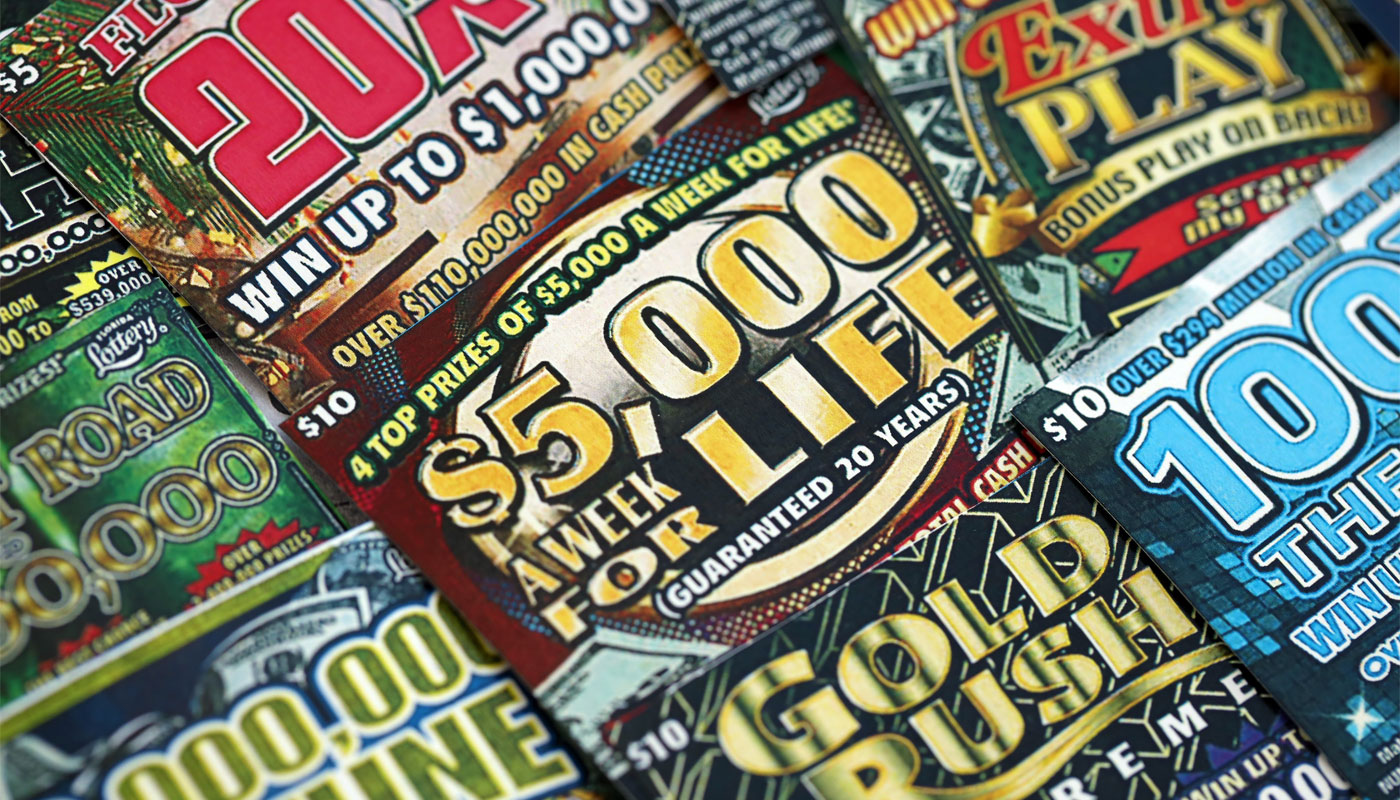
Gold Rush featured a $500,000 jackpot, the highest in the state at the time, but what made it really attractive to players were its odds. The chances of winning a prize were 1:2.95, meaning that there was one winner for slightly fewer than every three tickets sold. Like Bonanza, the new game also offered robust secondary prizes, ranging from $20 to $10,000, and it paid out a staggering 75% of the money it took in.
Florida lottery officials learned that spreading more money into second-tier prizes made the game more attractive than offering a bigger jackpot that only a few people could win. Despite the higher price, Gold Rush sold even better than Bonanza, generating $500 million in its first year of sales. To put that in context, in the years before Florida introduced premium tickets, total scratch-off sales totaled just $662 million.
That means that in 2002, Gold Rush alone generated almost 75% of the sales that every other ticket combined earned just two years earlier. By 2005, total statewide ticket sales reached $2.1 billion. However, that number still doesn’t capture the full impact of introducing high-priced scratch-off tickets. In five years, the Florida Lottery increased revenue from scratch-off ticket sales by 217%, even though total ticket sales rose by only 30%.
When they were first introduced, scratch-offs were presented as a cheap value game. Something to pick up while you fill up your car with gas. Florida showed that players were happy to pay more for a ticket if the payout percentages and second-tier prizes were attractive enough.
$20 Fever
$20 very quickly went from a novelty to a standard price point, and states pushed the limits on how much they could give away. While Florida’s jackpot topped out at half a million dollars, the Georgia Lottery introduced a new $20 scratch-off, which featured a top prize of $5 million.
In 2005, the Illinois Lottery issued a $20 $50 Million Spectacular ticket, which featured three jackpots of $2 million dollars and improved the odds to 1:2.75. By 2021, $20 tickets represented a massive share of total lottery revenue, totaling $13.1 billion in national sales and making up a significant portion of the overall instant-win market.
In Texas, $20 games went from nonexistent to 12% of total scratch-off revenue in just a few years. At the same time, the sales of $1 and $2 games dropped, showing that the real appetite for instant-win games was at the higher end of the market.
Twenty years after Florida introduced Cash Bonanza, $20 tickets represented 21% of the entire national scratch-off market, and $20 games even sold more total tickets than $5 games.
Super size me
After seeing the success of the $20 ticket, most state lotteries naturally asked, ‘How high can we go?’ both in terms of prizes and prices. $30 tickets had been tried since 2002, but they weren’t a regular part of most states’ game catalog until a few years after the growth of $20 games.
In May 2007, Texas introduced its first $30 game, Holiday Million Wishes. While the game’s jackpot of $2 million was under what some $20 games had, Million Wishes added something to make itself extremely enticing, even at a high price point. The odds of winning were 1:2.17, meaning almost one out of every two tickets was a winner.
The game was an instant hit and sold out ⅓ of its total run in just its first few months, generating over $37 million in revenue. But Texas didn’t stop at $30. In May of 2007, the Texas Lottery introduced a $50 ticket, the $130 Million Spectacular. To attract players, the game offered a massive prize pool of $133 million, which included three $5 million jackpots and six $1 million prizes.
Finally, in 2009, they introduced the $140,000,000 Extreme Payout, another $50 game but with a $10 million jackpot. When jackpots jumped into the $5-10 million range, they started competing with draw games, which traditionally had bigger prizes but substantially worse odds. Despite the price increase, the $50 games were an even bigger hit than the $30 games. $130 Million Spectacular generated $137 million in sales revenue in its first eight months.
While Texas was the leader in introducing super-sized games, other states quickly followed.
In January 2007, the Georgia Lottery created Georgia’s $500 Million Club, a ticket with a half-billion-dollar prize pool, including ten $5 million prizes, forty $1 million prizes, a grand prize drawing for $10 million, and another 81,000 prizes between $500 and $50,000. The game was a massive hit, generating almost $700 million in sales revenue in two years.
Eight months later, Massachusetts introduced the Billion Dollar Blockbuster instant win ticket, which, as the name promises, features a billion-dollar prize pool, including ten $10 million jackpots, one hundred thirty $1 million winners, and a grand prize of $1 million for life, guaranteed for twenty years. The game was a hit from day one and sold $40 million worth of tickets in just its first two weeks.
Across the country, it became a lottery-ticket arms race, with states vying to offer the biggest prize pools, most jackpots, and best odds for tickets costing upwards of $50.
The curious case of California
Even as jackpots, prize pools, and prices for scratch-off games exploded across the country, there was one state that curiously lagged behind its peers: California.
By 2010, massive prizes and premium prices were the norm for top-tier instant-win tickets; however, California’s most expensive ticket was still just $5 with a jackpot of $1 million, which lagged behind other lotteries.
While sales were surging in other states, California scratch-off ticket sales had fallen by 16% from 2007 to 2010. The reason was simple. At a time when some games paid out as much as 75% of gross sales, state law capped California’s payout at 57%, keeping prize pools small and odds high.
Faced with flagging sales, the state legislator agreed to increase payout percentages to 62% of total sales revenue, which meant players won an additional $400 million in 2010 alone. The new formula also let the state release more expensive games with bigger prizes, and just a few years later, the state introduced premium games that cost $30.
The new tickets were a hit, and the sales boost drove lottery officials to push the payout formula to some of the highest in the country. In 2015, $30 games paid out 80% of revenue, $20 games paid out 76%, and $10 tickets paid out 73%.
Two years after the increase, total ticket sales grew by $1 billion, and by 2015, they had almost doubled to $4 billion. The California lottery proved that paying out more to players could make more money overall.
More is more
When scratch-off tickets were first introduced in the late 70s, they were seen as an add-on product. Something you bought with your spare change while shopping for groceries, but the odds of winning were so low that most players didn’t see the point of playing.
Once lotteries realized that higher prices, better odds, and bigger prizes meant more sales, the market exploded, and scratch-offs became one of America's most popular gaming options.
Lottery numerology predictions
Every week, we bring you the most up-to-date astrological forecasts for all signs of the zodiac.