
News writer; Opinion columnist

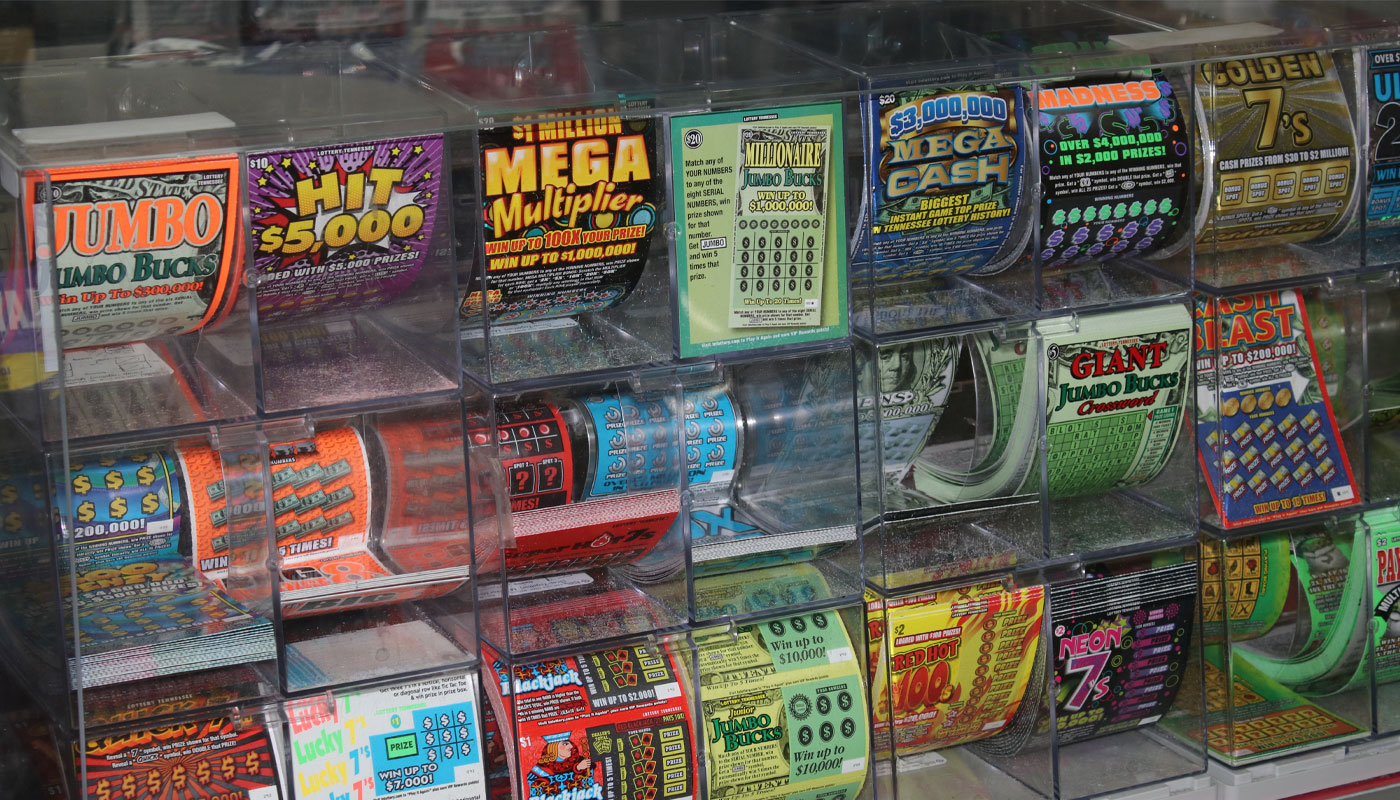
If you had $25 million in cash, how would you protect it? Maybe you’d leave it in a bank vault, or hire armed guards to stand around your house at all hours of the day. However, somewhere in America, there is a small piece of paper worth $25 million, and the only thing protecting it is the thin sheet of glass in the lottery retailer's display case.
Instant win games are big business. In 2024, Americans spent over $63 billion purchasing approximately eight billion individual scratch-off lottery tickets, and there are at least two different games, one in Massachusetts and the other in Florida, which offer $25 million jackpots.
When so much money is at stake in something so small, how do the people who manufacture instant-win tickets protect the integrity of their games and ensure no one tampers with their tickets?
Print billions to make millions
Scientific Games is one of the world’s largest producers of scratch-off tickets. Their five global ticket-printing facilities can produce up to 50 billion instant-win tickets annually. Their facilities operate 24/7 to meet the insatiable global demand for lottery games.
More than 70% of instant-win games sold in the United States are produced in the company’s Alpharetta, Georgia, printing facility. Their high-speed ticket-printing machines can process up to 1,000 feet of paper per minute and produce 1,000,000 tickets per hour.
Because one game can contain up to 18 different layers of inks, paper, and security features, a single ticket can go through 21 separate printing units before it's complete.
But an even bigger challenge than creating millions of tickets a day is ensuring every ticket meets the rigid security requirements that prevent tampering or duplication.
Facility security
Executives who have worked at Scientific Games have compared the protections at their plants to those at the US Mint, where the United States government prints cash.
To start, the entire building is under 24-hour CCTV surveillance. Additionally, security agents and managers wander the shop floor at all times to ensure that no one tampers with the tickets as they’re made.
Even employees who work in these facilities must undergo extensive criminal background checks to ensure they are trustworthy enough to handle the tickets.
But on-site security goes beyond the production process. The printer keeps a visual record of every ticket it produces that can be referred to if a ticket’s authenticity is ever in dispute.
These records contain the numbers & symbols, prize values, and codes that should be present in each individual ticket, so if someone alters an authentic ticket, the records can show exactly what was changed.
This information can also be used to authenticate tickets that are damaged and missing key validation information.
In extreme cases, if a forgery is suspected, printers can even analyze the chemical composition of the ink and paper used on a ticket to ensure it's consistent with the facility's production.
The security doesn’t stop when the tickets leave the facility. Every truck carrying lottery tickets is equipped with a sensor so it can be tracked as it moves to its final destination. The trailers are also secured with an anti-tamper seal, so distributors can be confident that no tickets were handled during shipping.
Optical blocking
In the early days of scratch-off tickets, scammers had two popular methods for trying to determine whether a ticket was a winner before they bought or scratched it.
The first was known as candeling, in which a scammer would shine a powerful light on the ticket to see the numbers under its covering.
The second was wicking, which involved using alcohol based solvents to force the ink of the numbers and symbols to bleed through the coating.
To combat scammers trying to see through a ticket, lottery printers generally use a combination of different printing techniques.
One of the first layers applied to all scratch-off tickets is a thick black coating printed beneath the variable game data (i.e., the numbers and symbols). The heavy black ink can absorb all light attempting to pass through the ticket.
Because the numbers are also printed in black ink, the black coating makes it extremely hard to distinguish them even under the most powerful lights.
Over this first black layer, a white layer is printed, which serves two functions. First, it provides a surface for printing the numbers.
Additionally, the formulation of the white layer, which often contains pigments such as titanium dioxide and mineral fillers, scatters light passing through the black layer and prevents it from bouncing back, effectively creating a second visual wall that makes the ticket difficult to read.
The scratch layer
While the back of a ticket is never meant to be altered, the front-side layer that covers the numbers is supposed to be removed.
This creates a different challenge, because the front-side layer has to be both impervious to visual penetration and to players who attempt to ‘micro-scratch’ or create tiny holes in the layer to see the numbers underneath.
While the coating over the numbers seems thin, it is actually a stack of several layers of black and white elastomer coats.
After the numbers are printed, they are covered with a clear coat of varnish. While this is easy to see through, the varnish prevents scammers from forcing the ink of the numbers to bleed to the surface.
This varnish also binds to the numbers layer, which prevents a scammer from scraping off the pre-existing numbers and reprinting them with their own.
Next is the scratch-through layer, which must be designed to crumble when uncovered. If it held together, a scammer could lift the layer intact, check the numbers, and then replace it.
Finally, printers will incorporate black lines and fake numbers and symbols into one of the scratch layers, so that if any light does manage to leak through, it will be difficult to distinguish the real numbers from the fake ones and random patterns.
Under international standards governing the production of lottery tickets, they must be constructed so that they cannot be read by scanners, infrared cameras, or high-powered lights.
Cryptographic validation
While the various layers of ink and chemical security provide a way to physically protect and validate a ticket, each instant-win game is also protected by a series of codes that create a unique and traceable identity.
Given enough time and the proper equipment, a sophisticated criminal organization could identify and recreate most of the patterns and layers that make up a ticket.
That’s why, before a ticket is eligible for play or shipped to a retailer, the code on every ticket must be transmitted and registered with the relevant state lottery organization.
That means even if someone could recreate a perfect counterfeit ticket, the lottery would know it was fake because it would have no record of it from the printer.
Most modern lottery tickets contain at least two bar codes that provide a wealth of information used to validate and track a ticket.
The back barcode usually relates to inventory management and contains information such as when the ticket was printed, a unique code for the individual ticket, and even its location within a ticket book.
The front code is generally used for prize validation purposes. This is also known as the VIRN (void if removed number). In older tickets, the VIRN number was located under its own layer, and if the player removed that layer, the entire ticket was invalid.
In modern tickets, the number is often located in the play area so that, once the covering is removed, the ticket's prize value can be validated using the code.
The security value of the VIRN number is that, even if someone creates a perfect reproduction of a lottery ticket, it can’t be validated unless it’s registered with the state lottery through the VIRN number.
Concealed numbers
The tickets are designed to be protected not only when they’re sold by retailers but also during production.
One of the most vulnerable moments for a scratch-off ticket is when the numbers and symbols are printed, but before the coating has been applied. At this point, all someone has to do is look at the ticket to identify the winner.
To ensure that no one sees which tickets have wins before they’re covered, this part of the process takes place in a locked, enclosed space with no people present, where printers spray the numbers at high speed before adding the covering.
For an additional layer of protection, the numbers are sprayed with a dot matrix pattern that creates a unique pattern along the outer edge of each number. From a distance, these numbers appear solid, but if you examine them closely, you’ll see a unique pattern on the outer edge of the numbers.
Ensuring that the numbers contain the correct pattern is a part of the lottery’s validation process.
The vault
Hold an instant win lottery ticket in your hand, and it feels like a thin piece of paper. But underneath the fun graphics and promises of millions is an extremely sophisticated, highly engineered game designed never to be tampered with, duplicated, or altered.
When something is extraordinarily valuable, we will usually use extraordinary security measures to protect it. That could mean vaults, bulletproof glass, sophisticated alarm systems, and guards.
But a lottery ticket only uses a few layers of ink and some sophisticated record-keeping to protect million-dollar jackpots and ensure the integrity of your game.
Lottery numerology predictions
Every week, we bring you the most up-to-date astrological forecasts for all signs of the zodiac.