
News writer; Opinion columnist

Everyone wants an edge when buying a lottery ticket. Whether it's playing lucky numbers, only buying tickets from certain stores, or scratching with a favorite quarter. Trying to tilt the odds in their favor is an important part of many people's lottery playing ritual.
However, there is only one proven method to guarantee a lottery win: buy tickets with every possible winning number combination the game offers. This is why sophisticated gambling syndicates with access to mountains of cash track lotteries around the world and wait for what they call the “moment of positive expectation”, the point at which the cost of buying every ticket for a lottery draw game is less than the jackpot after taxes.
While these moments are rare, they do happen, and many lottery observers believe that one of the biggest recent successful buyouts occurred in Idaho and was led by a group that should be familiar to long-time Lottery USA readers.
Idaho Cash
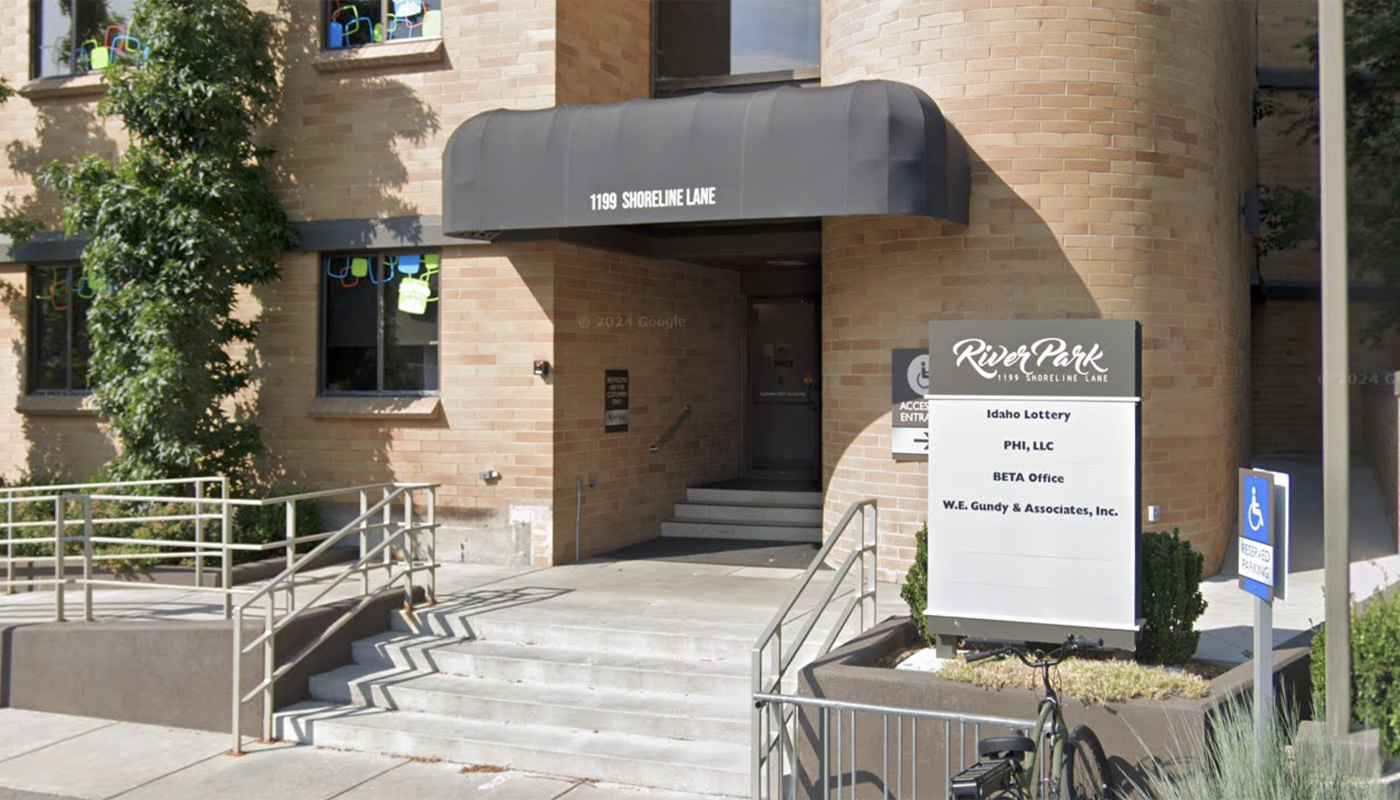
In September 2025, Idaho Lottery officials noticed something odd. Idaho Cash, the in-state draw game, saw its jackpot soar to unprecedented levels. By the time of the drawing, the top prize was worth $877,800, the highest in the game's history and more than twice as high as the second biggest jackpot.
Regulators studied the ticket sales data and quickly realized that someone was likely bulk-buying tickets to guarantee they'd win the game's top prize. According to some retailers, individuals were coming to their stores in the run-up to the September drawing and purchasing thousands of tickets at a time.
These suspicions were confirmed when, a few months after the drawing, a lawyer named Andrew Pierce stepped forward to claim the September jackpot on behalf of a Wyoming-based company called Mudspell Pizza LLC.
Pierce collected a check for $620,604.60 after accounting for taxes. If Mudspell bought every possible number combination as it is alleged, they would have also likely won multiple of the game's secondary prizes, likely bringing their total haul closer to one million dollars.
While the game's real winners tried to hide their identity behind an LLC, reporters and regulators connected Mudspell back to Black Swan Capital, a company allegedly founded by Manuel Montori, who is well known in lottery circles for his attempted buyouts of various lottery games.
Black Swan Capital LLC
In April of 2024, we wrote about a lottery-ticket-buying group run by four Princeton students operating under the name Black Swan Capital LLC. Allegedly led by Montori, they devised a plan to guarantee lottery wins by buying out instant-win tickets for games with a low number of available tickets and an unclaimed jackpot.
Their theory was that they could buy out the remaining supply of tickets, thereby increasing their chances of finding a big winner. This strategy worked at least once when Montori claimed a $5 million prize from a Missouri scratch-off ticket.
It's still not known whether their winnings exceeded their expenses, and several members of the group appear to have moved on to other careers since the peak days of Black Swan's lottery activities around 2020.
However, after staying off the radar for several years, it seems like Montori might have decided to continue his lottery enterprises.
Ban the buyers
Once Idaho lawmakers understood how Mudspell gamed the state lottery, they passed House Bill 504 with near-unanimous support from both the state House and the Senate. Under the bill, no one could spend more than $5,000 in 24 hours on lottery tickets.
Additionally, it forbids people from working in concert to bulk-buy, meaning those attempting this maneuver can't circumvent the law by hiring several people to buy to their limit.
Under the bill, anyone found to have violated the law is disqualified from collecting a lottery prize. However, because the law passed after Mudspell claimed its money, it wouldn't affect its September win.
Idaho Lottery Public Information Specialist David Workman told reporters why he thought HB 504 was necessary:
The lottery is for everybody, not for corporations. We take security and integrity very seriously here. We want everyone to have a fair and equal chance at winning, and this is a way to ensure we can protect the fairness and integrity of the games.
Lawmakers set the limit high enough so it wouldn't affect regular lottery players, but low enough that bulk buyers wouldn't be able to meaningfully tilt the odds in their favor.
The new law is scheduled to go into effect on July 1, 2026.
The mastermind
So what does the alleged mastermind, Manuel Montori, have to say about all of this? Absolutely nothing. Despite being well known in the press for several years now, Montori has never given an interview, and no one knows just how successful his various lottery-buying schemes are or where he has his sights set.
History of lottery buy-outs
Austrian mathematician Stefan Mandel is thought to be the first to pull off a successful lottery buyout. Mandel spent years studying and decoding the lottery until he developed a formula that allowed him to guarantee lottery wins.
While he won smaller lotteries in Europe and Australia, his biggest score came when he led a buyout group that attempted to purchase every possible combination of numbers for the 1992 Virginia Lottery 6/44 draw game.
His group purchased 7,059,052 tickets to secure a $27 million jackpot, along with hundreds of secondary prizes. A subsequent investigation by the FBI found that he did not break any laws, and Mandel collected his prize. Following his buyout, Virginia Lottery officials changed the rules to prevent bulk buying.
However, most lottery officials believed that what happened in Virginia was an anomaly and didn't bother to update their laws to prevent copycat cases.
The Selbees
The next great lottery buyout belonged to Jerry and Marge Selbee, a retired couple living in Ohio. Jerry recognized a flaw in a Massachusetts lottery game called Winfall. This game featured a rolldown, which meant that if no one won the jackpot once it reached a certain size, the entire prize would “roll down” to the secondary winners, who correctly guessed some of the numbers.
Jerry saw that the odds of winning increased if he bought a high volume of tickets for roll-down drawings. He and Marge drove to Massachusetts for every roll-down drawing, bought thousands of tickets, and made a profit on the secondary prizes.
The Selbee purchased approximately 70,000 tickets for every drawing. Eventually, others saw the same flaw in the game that Jerry did, and the entire scheme unraveled when the Boston Globe published a story about people exploiting the Winfall game.
In response, regulators discontinued the game, and the Massachusetts Lottery stopped offering roll-down games. By the time things ended, Jerry and Marge estimated they made a profit of $5 million on the game.
Lotto Texas
Perhaps the most notorious buyout occurred in 2024, when a group of investors known only as Rook LLC allegedly purchased 25.8 million tickets, representing every possible combination of numbers for the Lotto Texas draw game, and guaranteed themselves the $87 million jackpot.
Because Texas Lottery disclosure laws are not as strict as Idaho's, it’s not possible to know who exactly Rook LLC is. However, the evidence points to the European gambling syndicate Colossus Bets.
Colossus is allegedly fronted by Zeljko Ranogajec, who is widely considered one of the greatest gamblers in the world. While Ranogajec is extraordinarily secretive, those who have worked with him claim that he's attempted buyouts in lotteries all over the world.
Various sources claim that Colossus worked with the lottery ticket courier service, Lottery.com, and the Texas Lottery Commission to facilitate the purchase of the massive quantities of tickets they needed. Lottery Commission chairman Gary Grief is said to have arranged for several ticket-printing machines to be delivered to the Lottery.com offices, despite the courier service being out of compliance with state rules.
While buying out every ticket wasn't illegal, many have argued that the syndicate couldn't purchase every ticket in the three-day window between drawings without direct cooperation from the Texas Lottery Commission.
In the aftermath of this scandal, Grief resigned under pressure, lawmakers disbanded the Commission, and state lottery officials across the country pledged to do more to combat bulk buyers attempting to guarantee a lottery win.
However, despite their best efforts, it appears that bulk buyers have yet again managed to buy out a state lottery jackpot.
Bulk banning
For decades, regulators had a largely relaxed attitude towards bulk buyers. The job of the lottery is to sell tickets, and they welcome anyone who wants to spend tens of thousands of dollars buying up games.
In a podcast interview, John Martin, the director of the Maryland Lottery, said in reference to bulk-buyers:
How is this any different than an investment group buying stocks to gain an advantage over time in the marketplace? I don't know that it is. You can take a holier-than-thou attitude and say, well, 'It's not right, it's not fair.' But again, it's not illegal, and it's probably not a bad business strategy.
However, this attitude changed after the player and media-driven fury surrounding the Texas Lotto scandal, and states passed several laws designed to combat bulk buyers. In recent years, Indiana, Oregon, Montana, and Arizona have all passed laws designed to stop bulk buyers, and Indiana and Texas have also banned lottery courier services entirely.
Lottery numerology predictions
Every week we bring you the most up-to-date astrological forecasts for all signs of the zodiac.