
News writer

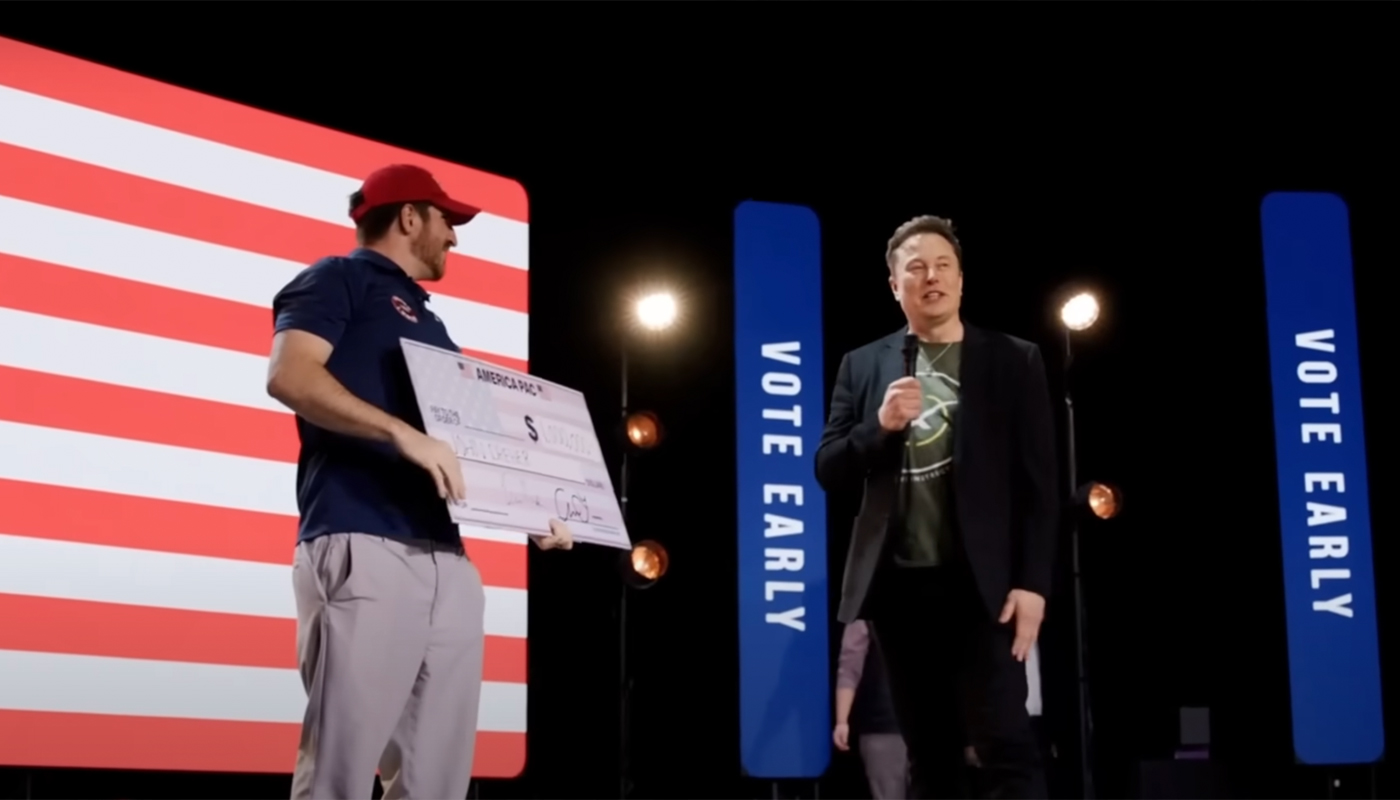
With Election Day less than a week away in the United States, a new controversy is taking place as Tesla CEO Elon Musk is being sued for allegedly “running an illegal lottery” in an attempt to sway registered voters in swing states to vote for a certain candidate.
The alleged incident
According to the lawsuit filed by Philadelphia District Attorney Larry Krasner, Musk announced at a rally on October 19 that if a registered voter turned over personal identifying information — address, cell phone number, and email address — and also signed a petition pledging support for the Constitution, then that person would be eligible to be picked randomly for a $1 million prize.
Krasner accuses Musk and his political action committee, America PAC, of trying to influence voters in the presidential election. Musk is backing Republican nominee Donald Trump in his run for president against Democratic nominee Kamala Harris.
The lawsuit comes days after the U.S. Department of Justice warned America PAC about its $1 million daily sweepstakes and how it might violate federal election law.
The lawsuit details
With $1 million in daily sweepstakes available for people who meet the requirements mentioned above, the lawsuit claims that America PAC and Elon Musk are “running an illegal lottery in Philadelphia” and they are “lulling Philadelphia citizens — and others in the Commonwealth (and other swing states in the upcoming election) — to give up their personal identifying information and make a political pledge in exchange for the chance to win $1 million.”
Krasner goes on to say that this is a lottery and “it is indisputably an unlawful lottery.”
Under Pennsylvania law, all lotteries in the state must be regulated by the state.
The lawsuit also claims Musk's lottery violates Pennsylvania consumer protection laws by “deploying deceptive, vague, or misleading statements that create a likelihood of confusion or misunderstanding.”
The court has set a hearing on Friday morning regarding Krasner's application for a preliminary injunction against Musk and the PAC, which would block them from continuing the daily award.
Lotteries vs. sweepstakes
This legal battle for Musk has brought up a debate over lotteries and sweepstakes. For definition purposes, a sweepstakes is an advertising or promotional contest where participants can enter for a chance to win a prize, with the winner(s) selected randomly. Participants typically aren't required to pay for an entry, but some sweepstakes may offer optional purchases or ask for personal information.
On the flip side, a lottery is a promotional device where items of value (prizes) are awarded to participants by chance, but it requires some form of payment to participate.
In addition, lotteries are typically run by government entities or authorized organizations. The proceeds from a lottery are often used to fund public programs. For sweepstakes, they are usually used by companies or organizations for marketing purposes. They are looking to engage with customers and/or promote products.
Sweepstakes casinos on the rise in the U.S.
Sweepstakes casinos are becoming more and more popular in the United States, as these companies are finding them to be a workaround to state gambling laws. Even though more states are adopting a mobile lottery platform, these sweepstakes casinos allow players to engage in games like blackjack, slots, and poker without having heavy restrictions.
The sweepstakes casinos typically have a dual-currency model, with players using free coins to play the games. However, there is also a secondary currency, which can be called “Sweep Coins,” where players can win or earn them through bonuses or specific actions. These “Sweep Coins” can then later be redeemed for real cash or prizes.
By giving players the free entry option, it allows these sweepstakes casinos to use the Sweep Coins and not be classified as gambling. They're technically a game of chance with no mandatory purchase required.
The sweepstakes casinos are removing the requirement to pay for a chance to win (which is the defining feature of gambling). This way, they can avoid the regulations that govern traditional casinos.
Enjoy playing the lottery, and please remember to play responsibly.








Comments