

News writer, Interviewer

The Hoosier Lottery hit $1 billion in scratch-off sales. Fast Play revenue? $40 million annually. Sales growth since 2013? 87%.
What drove these numbers?
Not luck. Strategy.
The question every lottery faces
How do you compete when players have endless gaming options?
The Hoosier Lottery answered with three moves: data analytics, portfolio management, and retail innovation. Each decision was tied directly to what players wanted, each change measured, and the result tracked.
"By working closely with retailers and leveraging data-driven insights, we've been able to create innovative solutions that benefit players, retailers, and the state of Indiana alike," says Sarah M. Taylor, Executive Director of the Hoosier Lottery.
Why personalization wins
Players don't want the same game twice.
The Lottery shifted from repetitive experiences to diverse ones. Games got distinct visual appeals, themes were changed, and prize structures evolved.
One move stands out: reducing top-prize allocations to boost middle-tier prizes. The result was more winners, store traffic, and transactions.
The data backs this up. Weekly lottery players are 2.5 times more likely than non-players to pay double for personalized products (58% vs. 23%, according to Foresight Factory research). The Lottery built games that matched this appetite.
Retailers noticed. Missy Holley, Category Manager at Lassus Bros. Oil, told Brightstar, "We have grown exponentially over the years. From the beginning with only some $1 Scratch-offs to the current $50 scratch tickets, the relationship has evolved."
What happens when you price up?
In 2016, the Hoosier Lotto+PLUS base game doubled from $1 to $2.
Was it risky? Yes. Players initially dropped off.
But the Lottery added value: enhanced odds, embedded multipliers, a $1 add-on for an additional drawing. The game rebounded. Portfolio stability followed.
By 2020, scratch-offs crossed $1 billion in sales. The formula? Prize structures that work. Visual design that pops. A portfolio that appeals to different player segments.
Where self-service changes everything
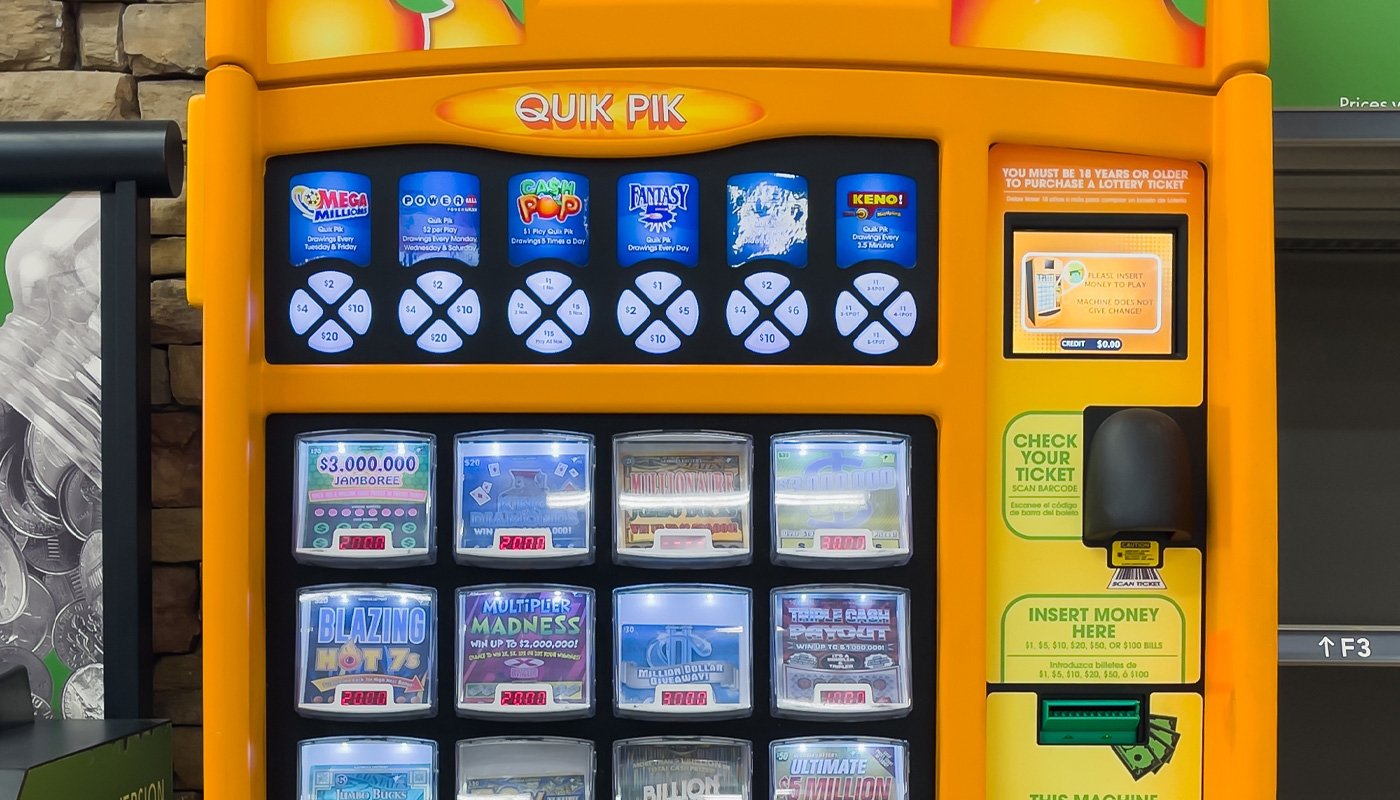
Self-service ticket vending machines now account for 19% of Indiana's lottery sales.
The shift didn't happen overnight. Distribution strategies evolved through self-service expansion, corporate partnerships, and region-specific optimization. Today, 37.7% of network retailers offer self-service—up from 19.8% in FY14.
Corporate accounts drive 70% of the state's retail lottery sales. These aren't small convenience stores. These are major retailers with tailored planograms ensuring the right game mix in every location.
How Fast Play became a $40 million category
Fast Play launched with a test-and-learn approach.
Limited initial marketing gauged interest. Targeted family games hit first. Then, data analytics predicted trends. The Lottery watched and made adjustments.
Then came the merchandising strategy: progressive jackpots promoted at point of sale, visually engaging materials that captured attention, and Fast Play AFTS (Ask for the Sale) that aligned retail engagement with mass media campaigns.
The breakthrough was the Lottery's first-ever Second Chance promotion, including all Fast Play games. An industry milestone. A new way to leverage untapped opportunities.
Revenue grew from near zero in 2015 to $40 million today.
The results
Data reveals what worked:
- 87% sales growth since 2013
- $1 billion in scratch-off sales (FY 2020)
- $40 million in Fast Play revenue
- 19% of sales from self-service machines
- 33 unique games per retailer
These aren't vanity metrics. They represent sustained growth through strategic innovation.
The Hoosier Lottery didn't chase every trend. It focused on what worked: understanding players through data, optimizing products based on performance, and expanding access through smart retail partnerships.





Comments