
News writer, Interviewer

I have never bought a lottery ticket. Not once. But I've bought plenty of raffle tickets: for a school fundraiser, a local charity, to support a colleague in need. That contrast got me thinking. Why does a raffle feel worth ten dollars, when a Powerball ticket with a billion-dollar jackpot doesn't move me at all?
The answer might say more about what lottery players actually want than the industry realizes.
Players keep asking for the same thing
Ask lottery players what they'd change about games like Powerball or Mega Millions, and a common answer comes up: smaller jackpots, more winners. Not a bigger number chasing one lucky person, but a bigger group of people walking away with something.
That's not how the big multi-state games are built. They're designed to grow a single jackpot until it's almost unimaginable, then hand it to one person. It's a great headline. It's a lousy shot at actually winning.
Raffles work the opposite way. Spread the same pool of money across hundreds, sometimes thousands, of winners, and the odds start to look concrete and attainable.
The raffle format, explained
A raffle is simple by design: sell a fixed, finite number of tickets, then draw winners from that pool. No rolling jackpot, no astronomical odds that shift with every ticket sold elsewhere in the country. Just a known number of tickets and a known number of prizes.
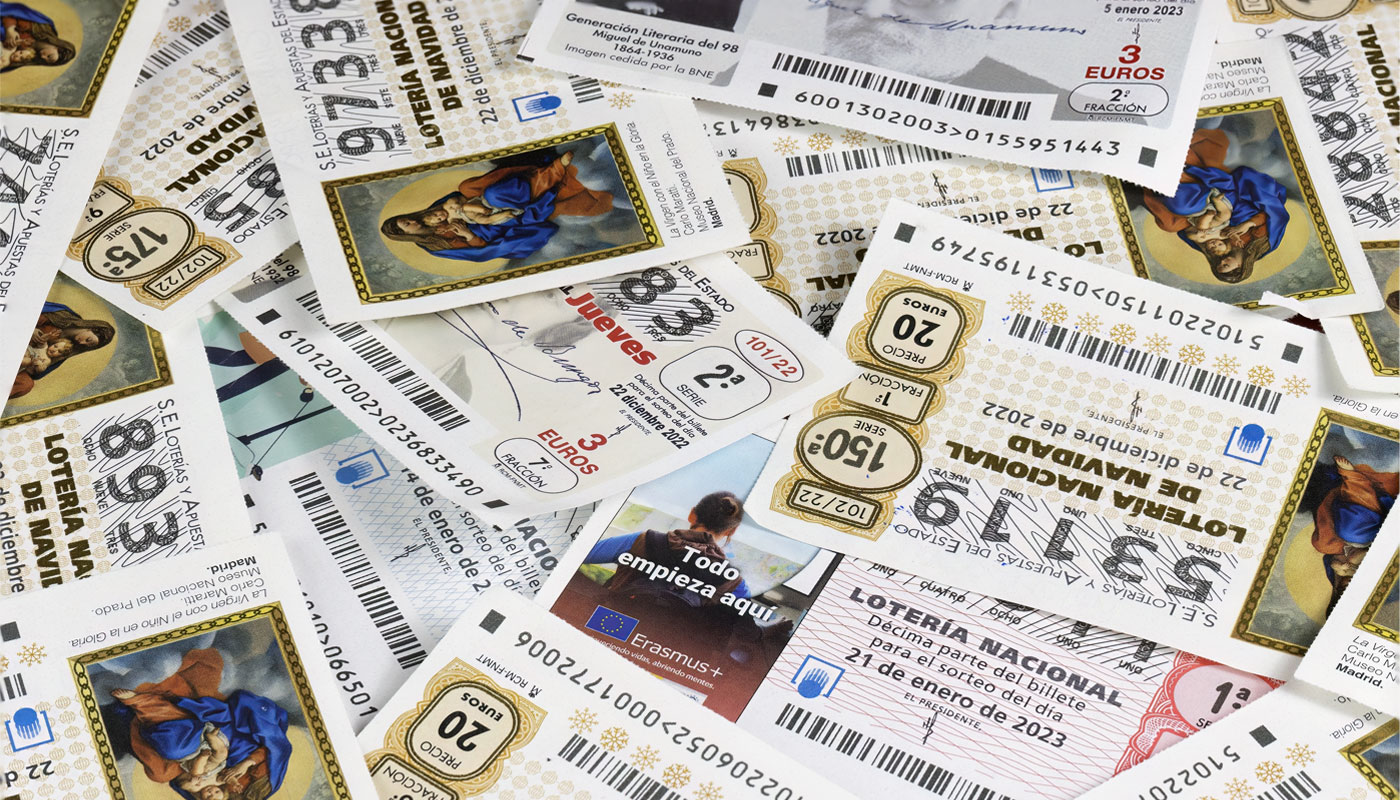
Spain's Christmas Lottery, El Gordo de Navidad, is the clearest example of this model taken to its extreme. Rather than one grand prize, El Gordo spreads its winnings across a huge number of ticket holders. Each five-digit number is printed thousands of times and split into tenths, called décimos, so neighbors, coworkers, and entire towns often hold the same winning number together. When a number hits, it doesn't create one millionaire. It can lift an entire village.
That's the raffle promise: a big prize pool, smaller individual prizes, and a lot more winners than a traditional jackpot game.
American raffles are making a comeback
Several US lotteries have noticed the appetite for this format, and 2026 has been a busy year for raffles.
The Florida Lottery brought back its Millionaire Raffle after a decade away, selling 2 million tickets at $20 each and guaranteeing at least ten $1 million grand prizes — with more added for every 500,000 tickets sold beyond the first million. Along the way, four interim drawings hand out thousands of smaller prizes, and every ticket stays eligible for future drawings, win or lose.
Montana Millionaire just turned 20, and the state didn't slow down to celebrate. The 2026 edition added 100,000 tickets, six $1 million grand prizes, and hundreds of additional smaller wins, all while keeping the $20 price tag. Last year's game sold out 620,000 tickets in six and a half hours. That's not a fluke. That's demand.
Virginia rang in the new year with five $1 million raffle winners and seven more at $100,000, plus a thousand $500 prizes. Minnesota sold a million tickets for its Millionaire Raffle in a record 14 days and handed out 20,000 total prizes. Washington capped its St. Patrick's Day Raffle at 250,000 tickets specifically to sharpen the odds, and 117 players walked away winners.
North Carolina marked the nation's 250th anniversary with the Celebrate America Raffle, a $10 ticket with odds of roughly 1 in 11 to win something. Simple mechanics, no numbers to pick, just a ticket and a drawing.
Even Massachusetts, which has only run a raffle once in the past decade because of how hard they are to manage through retail, is planning to bring raffles back now that online lottery sales make the logistics easier.
And outside the US, the US Virgin Islands Lottery built an entire Carnival season around one: the Carnival Cash Explosion offered a $500,000 grand prize alongside smaller cash tiers and extras like a getaway to Puerto Rico and a new Chevy, all timed to a cultural celebration people already show up for.
Different states, different themes, same underlying bet: players respond better to a raffle than to a jackpot chase.
Why does a raffle feel different?
Psychologists have spent years mapping out why people play the lottery at all, despite odds that can run past 1 in 250 million. A handful of mental shortcuts help.
There's the gambler's fallacy, the belief that a number is somehow "due" after not showing up in a while, even though every drawing is independent of the last. There's availability bias, where publicized winners make wins feel common, even though losses vastly outnumber them. There's sunk-cost thinking, where players keep buying the same numbers because stopping now would waste everything spent so far.
None of that fully explains the raffle, though. A raffle taps into something else.
Set a raffle next to a jackpot game, and the differences stack up:
- Perceived odds: A pool of 25,000 or 250,000 tickets feels winnable in a way that 1 in 250 million never will.
- Motivation: Many raffles support a charity, a school, or a cultural event, so buying in feels like giving, not just gambling.
- Agency: You're choosing a physical ticket from a finite pool, not a random number combination lost inside a number line stretching into the hundreds of millions.
- Regret avoidance: If you don't win, the money still went somewhere: a cause, a community, a celebration. It reads less like a loss and more like a donation.
That combination is hard to beat. A raffle doesn't ask you to believe you'll beat 300-million-to-one odds. It asks you to join a smaller, more human pool, where losing doesn't sting the same way.
The bigger picture
Lotteries built the billion-dollar jackpot to grab headlines, and it works. But headlines aren't the same as satisfaction. Players keep saying they'd rather have better odds and a real shot at winning something, even something modest, over a number too large to picture.
Raffles already proved the model works. Florida sold out fast. Montana sold out faster. Minnesota broke its own record. If lotteries want to know what players actually want, they might not need to guess. They could just look at the raffle line.
Lottery numerology predictions
Every week, we bring you the most up-to-date astrological forecasts for all signs of the zodiac.