
News writer; Opinion columnist

No matter where you look or what type of media you consume, one topic feels completely inescapable: Artificial Intelligence. From OpenClaw to Anthropic to the ongoing battle between OpenAI and Elon Musk, AI stories dominate our newsfeeds, our attention, and our economy.
So it was probably inevitable that some lottery players would attempt to use AI's massive computational power to help them win a prize. After all, you can allegedly use AI to build a Fortune 500 company, do your taxes, and code new apps while working from your pool, so why shouldn't it help you win a million dollars?
Well, we can think of at least one very good reason.
Lottery drawings are a random chance. No system or special code, no matter how advanced, can predict a game's winning numbers. Even studying the patterns of past winning numbers is useless because the results of one game have no impact on the next.
Yet whenever there are millions, or occasionally billions, of dollars at stake, people will try to devise a way to beat the system, and AI is just the latest in a long series of methods they have used.
The winners
We have to acknowledge that part of the reason some people believe AI can help them win is that previous players claimed it did.
After Virginia resident Carrie Edwards won $150,000 playing Powerball, she told reporters that she used the AI app on her phone to pick the winning number:
I'm like, ChatGPT, talk to me… Do you have numbers for me?
It turns out the app gave her the winners, and she rode those numbers to a six-figure prize, which she pledged to donate to charity.
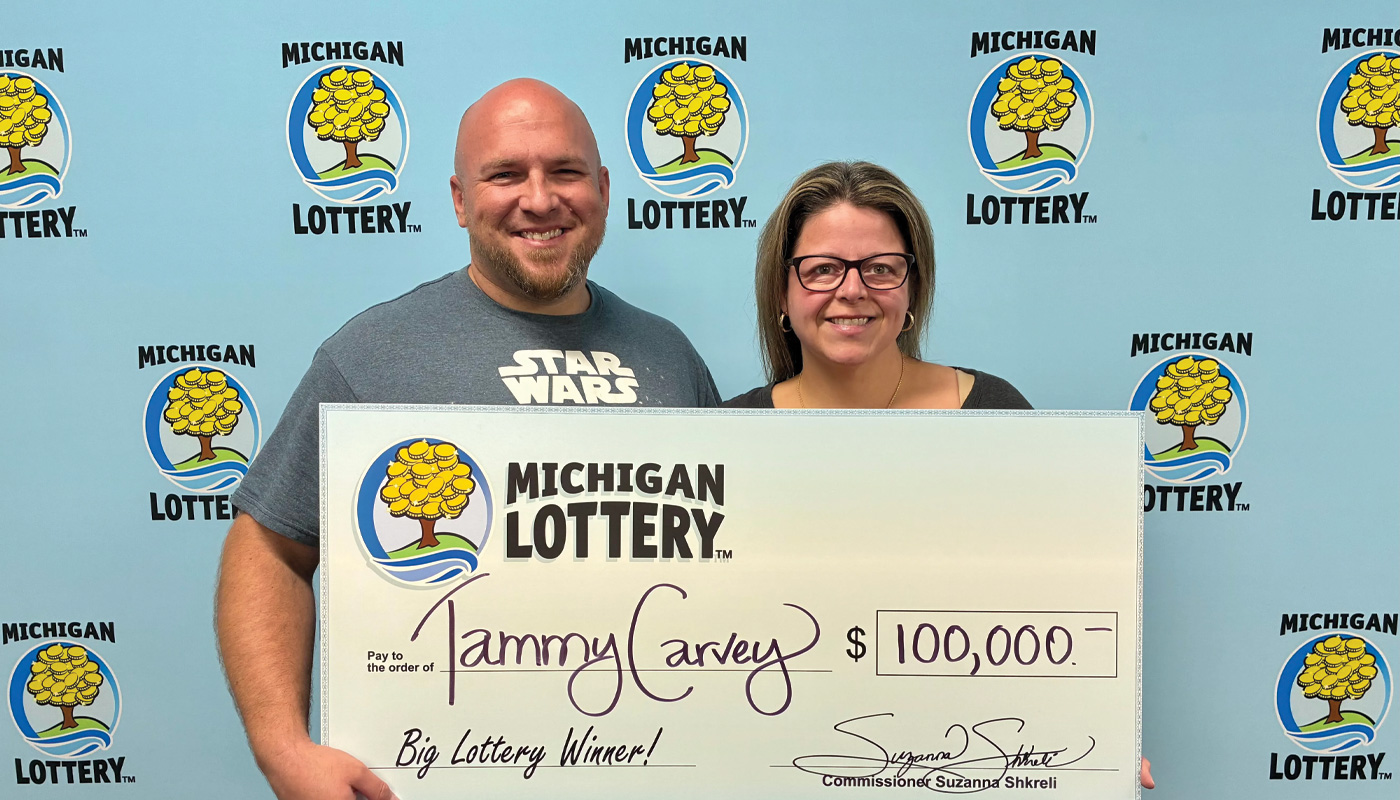
Just a month after Edwards' big win, another woman stepped forward to credit AI with her $100,000 ticket. Tammy Carvey of Wyandotte, Michigan, also credited ChatGPT with picking her winning Powerball numbers.
“I asked ChatGPT for a set of Powerball numbers, and those are the numbers I played," she told reporters. The AI app correctly picked four white balls, winning her a $50,000 prize, which doubled to $100,000 because she added the Power Play option to her ticket.
To give this list an international flavor, a group of university students in Italy claims that they won 50,000 Euros using an AI program they designed to predict numbers, but that does beg the question: if you can predict lottery wins, why settle for 50,000 and why tell anyone?
The losers
The reason we're aware of Edwards and Carvey is that they won, and most lottery news focuses on winners. But what's instructive is that since Carvey's success eight months ago, it's tough to find any stories about lottery winners crediting ChatGPT with their success.
As many words as we write about the lottery, we pretty much never tell the stories of lottery losers. After all, what's more common than someone not winning the lottery?
So while it's almost guaranteed that thousands of people have used ChatGPT to play losing numbers, we never hear about them, and the only AI lottery stories we read are about the winners, which biases us towards the idea that it works.
So the real question isn’t "can AI help you win the lottery", but why do so many people think that they're just one good ChatGPT prompt away from winning a fortune?
Dream books
While AI is relatively new, the desire to predict winning numbers is not.
As long as lotteries have existed, people have attempted to create systems that would help them win. The first popular lottery prediction tools were known as dream books, which assigned numerical values to symbols and images people might see in their dreams.
For example, if someone dreamed of a black cat, a dream book might tell them they should pick the number seven in a lottery game. One of the earliest known examples of a dream book is La Smorfia, which was created in Naples, Italy, in the seventeenth century.
The lottery was extremely popular in southern Italy, and interpreting dreams was considered an essential part of playing the game. From Naples, dream books spread across the world and were particularly popular in Latin American and Caribbean countries, as well as in American cities, when number rackets, an illegal precursor to modern lotteries, were popular.
But dream books were just the start of La Smorfia. Many other people believe that they can use astrology to divine winning numbers based on Zodiac signs, moon phases, the alignment of planets, and even the lucky numbers in their daily horoscopes.
The underlying belief of these players is that earthly events are subject to cosmic influences and that, by understanding the stars, they can predict events on Earth.
However, much like ChatGPT prompts, the lack of success of dream interpretation and star signs in predicting winners didn't seem to dampen people's enthusiasm for using it.
Number systems
Some players who didn't believe in the power of dreams or stars have attempted to develop complex mathematical systems to find a hidden pattern in the winning numbers.
Long before people could use the awesome computational power of AI models to crunch the digits and detect patterns across thousands of lotteries, people had studied, analyzed, and dissected years of drawing data to search for any predictive patterns in lottery numbers.
It's not just the lottery that people have attempted to "crack" through statistical analysis. Any number-based gambling game, such as roulette, has thousands of players trying to determine a way to predict winning numbers, but they all run into the same problem: it's literally impossible.
The problem with any "predictive math system" is that every lottery drawing is an independent event, meaning that the results of one drawing have absolutely no impact on the results of the next. So even if you do find some kind of pattern, such as the number three is 60% more likely to be pulled on a Saturday drawing, that fact is purely a matter of random coincidence, and its existence is in no way predictive of what will happen in the next drawing.
In simple terms, the issue is that no one has figured out the right system because no system can exist for independent, random events. No AI system is strong enough to create knowledge, in this case, winning numbers, that don't exist.
To illustrate this point, a tech writer named Jan Kammermath tested several AI models by having them analyze 10 years of data from a German lottery that uses the same gameplay system as Powerball and Mega Millions. She applied the data from the various models, bought several lottery tickets, and won precisely zero dollars.
However, just because it's impossible doesn't mean that some companies won't prey on your desire to win by attempting to sell you a "system" that works, but it's important to consider if anyone actually had devised a way to predict lottery numbers, why would they sell it to you instead of winning the lottery themselves?
The real AI winners
In case I haven't been clear enough yet: using artificial intelligence will not help you win the lottery, but that doesn't mean it can't affect how the games are played. The biggest beneficiaries of AI models will be the organizations that run games.
From anti-cheating technology to analyzing sales data, there are myriad possible use cases for AI in the operation of lotteries and gambling. For example, by better understanding which types of games players like and when & where they are most likely to buy them, retailers can optimize their marketing plans to attract players.
AI can also be used to protect against fraud, and by detecting unusual buying patterns more quickly, it can alert authorities when someone is trying to stage a lottery buyout and guarantee themselves a win, as happened in the infamous Lotto Texas scandal in April 2023.
AI could also identify problem gamblers and suggest an intervention, or they could be used to find people who attempt to cheat or create false identities on iGaming sites. There are dozens of possible applications for AI in the lottery, but predicting winning numbers is not one of them.
I want to believe
Lottery players use AI to win for the same reason previous generations of players have used dream books, astrology, and various number systems: a desperate human instinct to control something that feels uncontrollable.
But the failing of any AI model to predict winning numbers is that no computer can discover information that doesn't exist. That’s why, despite its technological advantages, using AI to win the lottery is really no more effective than trying to interpret the meaning of symbols with a Neapolitan dreambook.
So just remember the next time you read a news story about a lottery player who credits their win to AI, there are 50,000 more stories about lottery players who used AI and lost that will never be written.
Lottery numerology predictions
Every week, we bring you the most up-to-date astrological forecasts for all signs of the zodiac.