
News writer

What do you do with a lottery ticket if you lose on it? For most people, the answer is pretty simple. They would check the numbers one last time, accept that retirement is off the table for now, and toss the ticket in the trash. Maybe you hold onto it for a few more days because you’re convinced you checked it wrong. Eventually, though, that little piece of paper has served its purpose. Or has it?
Shockingly, there is a surprisingly active secondary market for old lottery tickets. Some of these tickets are sold individually as collectibles. Other tickets are preserved because they’re connected to famous jackpots, scandals, or memorable moments in lottery history, like the Triple Six Fix ticket that recently sold online. Vintage scratch-offs can appeal to collectors because of their artwork, themes, or age.
Then, there are people selling huge piles of losing tickets online for a very different and much more questionable reason. All of this raises a fascinating question: When does a worthless lottery ticket stop being worthless? That answer may depend less on the numbers printed on it and more on the story behind it.
People collect lottery tickets?
As weird as it sounds, yes, some people collect lottery tickets. I mean, is it any weirder than people collecting old baseball tickets, concert stubs, or movie posters?
None of these things necessarily has much practical value anymore. What they do have is what they represent.
Lottery tickets can work the same way. An old ticket is a snapshot into a particular game, place, and moment in time. The design might have changed. Heck, it might not even exist anymore. The ticket could come from a lottery’s earliest years or feature artwork that hasn’t been seen in decades.
Scratch-offs may be even more interesting because lotteries constantly replace them with new games. A ticket that you could find in every convenience store 20 years ago could become surprisingly difficult to find today.
Keep in mind that doesn’t mean every Powerball ticket sitting in your junk drawer is suddenly worth $500. Most losing lottery tickets aren’t worth anything. But the assumption is that every losing lottery ticket sitting in your junk drawer is suddenly worth $500. Most aren’t worth a thing.
Collectors don’t care whether the ticket can still win. They care about what the ticket actually is.
Sometimes the story behind the ticket means more than the actual ticket
We’ve already seen an incredible example this year. In July, Lottery USA reported that a Pennsylvania Lottery ticket connected to the infamous 1980 “Triple Six Fix” scandal was headed to auction after being discovered at an estate sale.
This wasn’t just some random losing ticket from 1980. No, the ticket was tied to one of the most notorious scandals in American lottery history.
On April 24, 1980, Pennsylvania Lottery viewers watched as 6-6-6 was drawn in the Daily Number game. It was eventually determined that the drawing had been rigged. Ping-pong balls used in the drawing had been altered so that only certain numbers could be selected.
Nick Perry, who hosted the live drawings, was ultimately convicted for his role in the scheme.
Now, more than four decades later, a ticket connected to that drawing came to light. Suddenly, the value of that piece of paper had almost nothing to do with whether its numbers won.
Instead, that paper had become an artifact. That’s the type of lottery ticket that makes the collector market much easier to understand. You aren’t buying a chance to win money. No, you’re actually buying a piece of the story.
What makes an old lottery ticket collectible?
To be honest, there’s no simple formula for determining whether an old lottery ticket is valuable. Age alone isn’t enough. Something can be old and still be incredibly common. On the other hand, a relatively new ticket could become desirable if it’s connected to some kind of important event. The biggest factor here may be historical significance.
Imagine having a ticket from the first Powerball drawing. How about an early Mega Millions ticket? Or a ticket from one of the discontinued state games that longtime players still remember?
Then there are tickets linked to enormous jackpots. A ticket from the drawing that produced a record-breaking jackpot isn’t the winning ticket, but it can still represent a significant moment in lottery history.
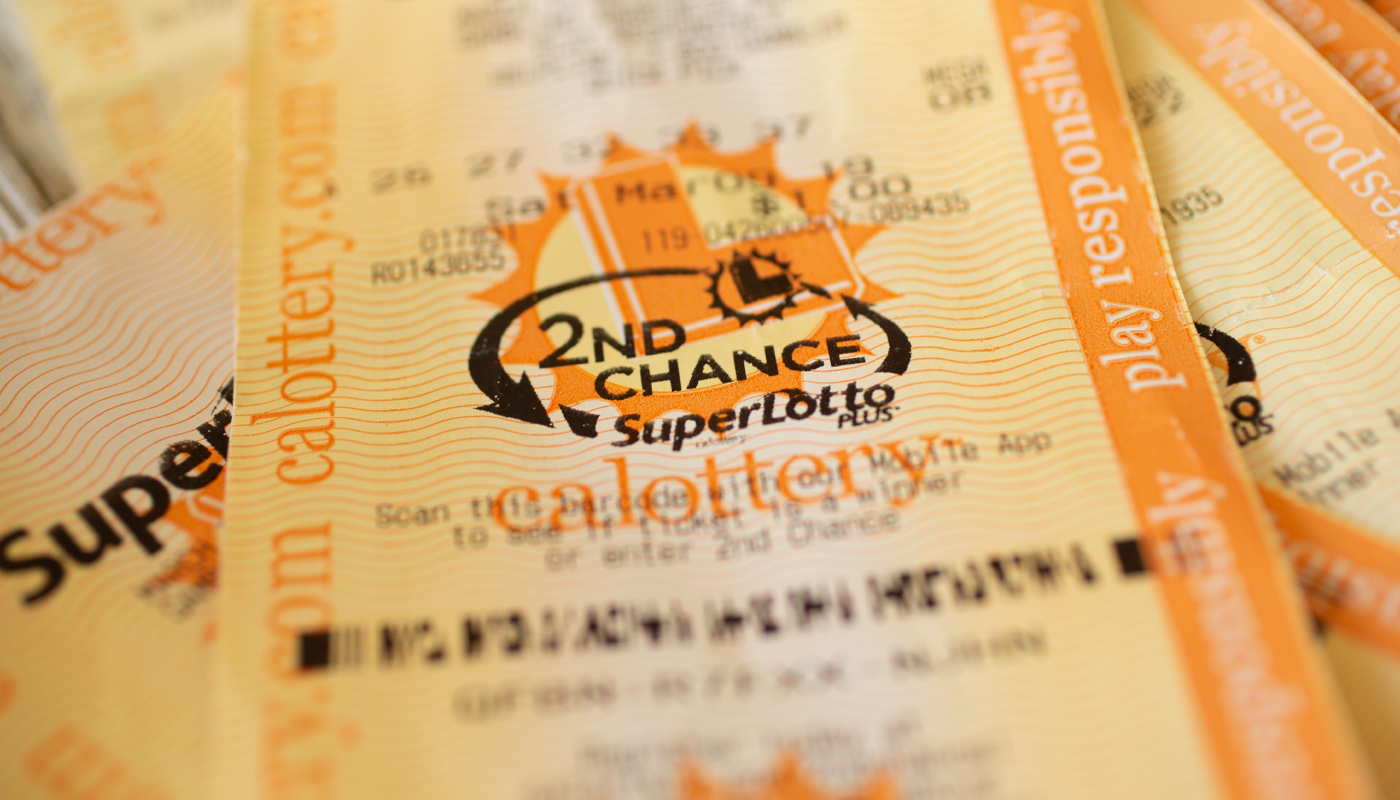
The design of the ticket matters, too. Scratch-offs are essentially small pieces of disposable artwork. States release games tied to holidays, sports teams, movies, TV shows, and local themes. Some even have unusual shapes, graphics, or game mechanics. Most of these tickets are scratched and then thrown away (if a losing ticket). That means an unscratched or well-preserved example could eventually become much harder to find.
Does that mean it’ll be worth a fortune? Probably not. However, collecting isn’t always about making a fortune. Sometimes people simply want something because hardly anyone else thought to save it.
Today's trash = tomorrow's memorabilia
That’s one of the most interesting parts of collecting anything. We don’t always know what’s worth preserving until years later. Think about how many people have thrown away old concert posters, baseball cards, toys, and advertising signs because they were everyday objects at the time.
Lottery tickets are designed to be temporary. You buy one. The drawing takes place, or you scratch it. You find out if you won. The experience is over.
That disposability could eventually make certain tickets more interesting. Millions of copies of tickets might originally be printed. However, how many of them survive 30 years? And how many survive in good condition?
This is very important, as buying lottery tickets becomes more and more digital in some jurisdictions. If more players are buying tickets through websites and apps, then today’s physical tickets could represent an era of lottery play that looks different decades down the road.
We’re probably not heading toward a future where people fight over a random 2026 losing Powerball ticket. However, certain physical tickets could absolutely become more interesting as the lottery experiences changes.
eBay allows old lottery tickets, but with an important catch
Online marketplaces have made it a lot easier for niche collectors to find each other. This includes eBay, where old lottery tickets can be sold under specific circumstances.
The company’s policy generally prohibits lottery tickets, raffles, and similar items. However, the website will make an exception for expired lottery tickets that have some kind of collectible value. If so, the listing must clearly identify the ticket as expired, and the sale is permitted under applicable local law.
This distinction makes sense. An active lottery ticket potentially represents a gambling transaction. If the ticket has expired, then it can’t win anything, which means it’s a collectible.
However, this exception also creates an interesting problem: How exactly do you define “collectible value”?
A 46-year-old ticket linked to the Triple Six Fix seems like an obvious example. A vintage ticket from a discontinued game? Sure. An unusual scratch-off preserved for decades? That seems about right, too. What about 5,000 losing scratch-offs stuffed into a box? That’s where this story gets strange.
Not everyone buying these tickets is a collector
According to a recent report in Fortune, they examined losing lottery tickets on eBay and found some interesting examples. These weren’t for rare pieces of lottery history.
Instead, these sellers were offering up piles of losing tickets. One listing had $5,200 worth of losing Ohio Lottery tickets for $29.99. There was even a listing that had $90,000 worth of losing Florida Lottery tickets for $575.
Some of these listings were labeled as collectibles, vintage items, or materials for arts and crafts. Others made a much more questionable selling point: tax write-offs. No, that’s not collecting. Instead, it’s an attempt to create evidence of gambling losses someone didn’t actually experience. And there’s a big difference between the two.
Buying someone else's losses doesn't make them yours
Lottery and gambling winnings are taxable income. For taxpayers who itemize, they could deduct gambling losses up to the amount of their gambling winnings if they could provide proof of those losses. However, it’s become even more restrictive.
Starting with the 2026 tax year, federal law limits the wagering-loss deduction to 90% of eligible losses rather than 100%. The IRS stated that taxpayers who don’t itemize can’t claim the wagering-loss deduction at all.
Keep in mind, this is for YOUR losses. If you buy a stranger’s losing tickets on eBay, that doesn’t mean those losses are not your losses. If someone spent $20,000 on scratch-offs and you bought them on eBay for $100, you didn’t suddenly suffer $20,000 in gambling losses. Instead, you bought $100 worth of old paper.
Jeffrey Hoopes, an accounting professor at the University of North Carolina’s Kenan-Flagler Business School and research director of the UNC Tax Center, told Fortune that using these purchased tickets to falsely offset gambling winnings would constitute tax fraud. This should be obvious.
However, there is clearly a market online for it. That means the demand for large amounts of losing tickets is there, and has little to do with memorabilia.
Timing is key
There is something else to keep in mind. Hoopes examined historical eBay listings containing the phrase “losing lottery tickets” from 2014 to 2017. No surprise here, but these listings increased early in the year. They peaked around March before then dropping off significantly after the tax season.
This doesn’t mean every buyer was committing fraud. There might be legitimate reasons someone might buy expired lottery tickets. A collector might want them. An artist might be using them in a project.
Maybe a researcher wants to study them. Hoopes said he has purchased losing tickets and keeps them in a tax museum.
However, when demand for these losing tickets increases as Americans are preparing their tax returns, it’s pretty fair to ask what’s driving it. A box containing thousands of ordinary losing scratch-offs doesn’t suddenly become historically significant because April 15 is approaching.
A losing ticket can still tell a winning story
There’s something ironic about a lottery ticket becoming valuable only after it can no longer win. The lottery is built around immediate value.
Your ticket either wins or it doesn’t. Collecting works differently.
Time, rarity, and history can transform an object nobody wanted into something another person might be willing to pay to own. That’s why there is a legitimate market for old lottery tickets. That market deserves to be separated from the questionable market for bulk losers.
One of these things is about preserving history. The other is about pretending someone else’s gambling losses belong to you.
If the ticket is connected to a historic jackpot, a discontinued game, an unforgettable scandal, or simply an unusual moment in lottery history, then that worthless ticket might have another life ahead of it. It just probably isn’t the kind you imagined when you bought it.
Enjoy playing the lottery, and please remember to play responsibly.
Lottery numerology predictions
Every week, we bring you the most up-to-date astrological forecasts for all signs of the zodiac.