
News writer; Opinion columnist

Creating an effective advantage play system is the holy grail for anyone who likes to game. Advantage play is when someone can tip a game's odds in their favor because even a small advantage, say a 51% chance to win, can pay off huge if it's exploited correctly.
The most famous form of advantage play is card counting in blackjack, but players will try to apply it to almost any game, even lottery games. While the random nature of lottery games seems like they should be impossible to game, there are a few ways to tilt the odds in your favor.
For draw games, lottery buyouts, such as the 2023 Lotto Texas scandal, can push the odds of winning to 100%. The only trick is that it takes tens of millions of dollars to buy enough tickets to guarantee a win.
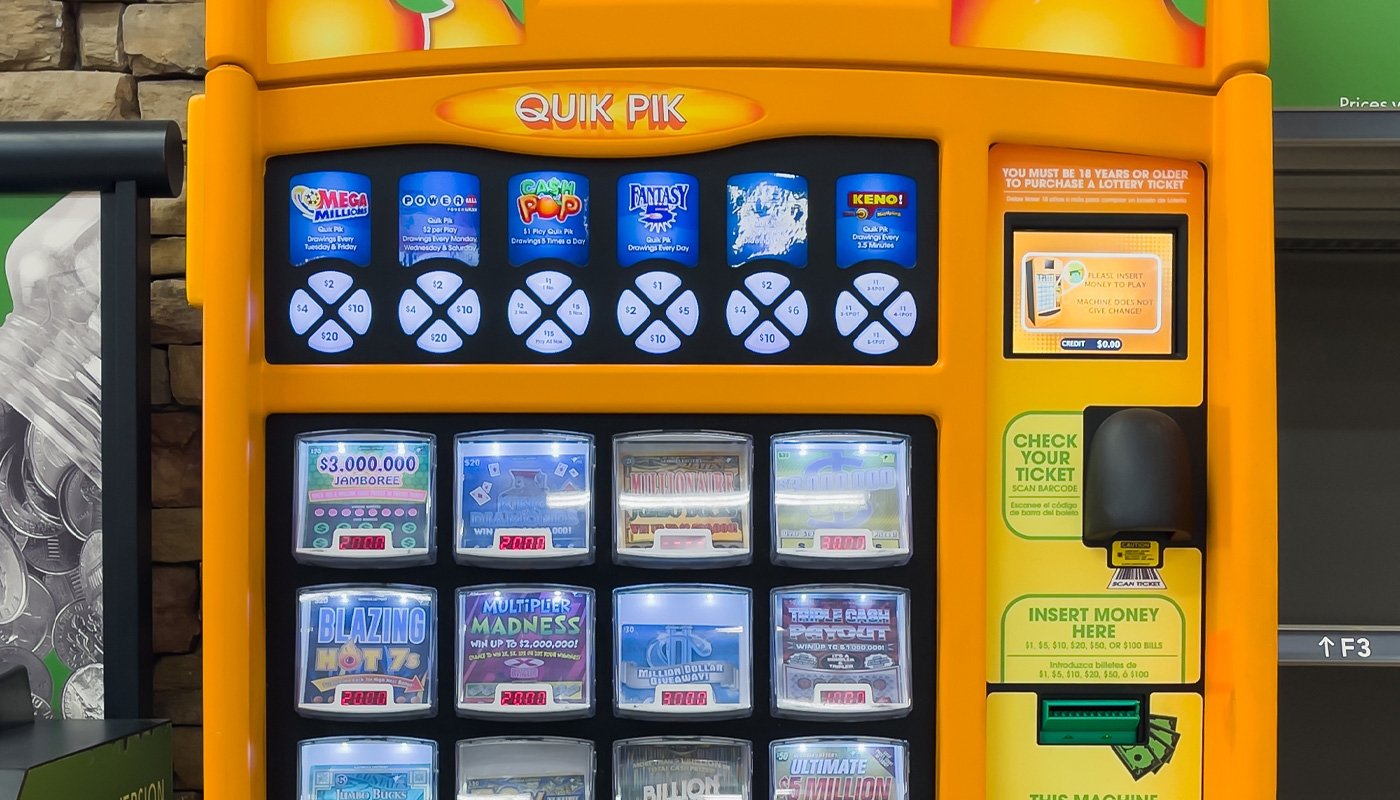
But can you find an advantage with scratch-off tickets? Some players believe they have, and a few big spending groups claim to have won millions by shifting the odds in their favor.
The Princeton Connection
The most famous group of scratch-off advantage players is Black Swan Capital LLC. Founded in 2020 by a group of former Princeton students led by Manuel Montori IV. Black Swan believed they knew how to play the lottery for a profit.
And they may have been right.
According to publicly available records, members of the group collected about $6 million in lottery winnings, with $5 million coming from a scratch-off ticket Montori purchased in Missouri. But did they really develop a unique system that let them win a game of random chance? Kind of.
Interviews with retailers indicate they would buy thousands of tickets at a time, focusing on games with a low supply of tickets and outstanding jackpots. They traveled from state to state, looking for games where they felt bulk buying would tip the odds in their favor.
Ultimately, it's impossible to know how successful their scheme truly was. Their $6 million in winnings is closer to $3 million after taxes, and at a minimum, they spent hundreds of thousands of dollars on tickets, not including the expense of traveling from state to state to find games to buy.
While Black Swan is the most famous of the scratch-off advantage players, they’re not the only ones who thought they could tip the odds in their favor.
In 2025, a Wayne County, Michigan, man said that he won big playing the $4,000,000 Winner by looking for games with outstanding jackpots. He told reporters:
I like playing the $30 games and saw on the prizes remaining page on MichiganLottery.com that the $4,000,000 Winner still had all three top prizes remaining, so I went to the store to buy a ticket.
He added, “The store had three $4,000,000 Winner tickets left, so I bought all three, scratched the barcodes, and scanned the tickets.”
It turned out his hunch was right, and he walked away with a cool $4 million.
Another woman in Maryland says that she picks tickets by checking her lottery app and seeing which games have the most uncollected jackpots. Her strategy paid off when she won the top prize playing a $100,000 Crossword and walked away with a six-figure prize.
Did they just get lucky, or is there really a way to tilt the odds in your favor?
Scratch-off strategy
Winning the lottery is supposed to be random, and the odds of winning should be the same for everyone, but is that always true?
For draw games, yes. Draw games have no memory. The numbers selected in one drawing don't affect the numbers selected in another. There’s no information that can meaningfully change the odds from one drawing to the next.
But scratch-off games are slightly different. First, there is a set number of tickets and a set amount of prizes, and because those numbers change as the game is played, your actual chances of winning can change as well.
To make this point, let's use some simple numbers. Let's say a game issues 100 tickets, and ten of those tickets are winners. That means you have a 10% chance of winning. Now, say 50 tickets were sold, and 7 winners remain. Now your odds of winning have improved to 14%.
By the same token, if 50 tickets are sold and only 3 winners remain, your odds of winning are only 6%. So by knowing how many tickets are left and how many grand prizes remain, players can see which games are more likely to offer a big payout than others.
Data analysis
The problem is that this system depends on two distinct but related variables, and reliable information is available for only one.
Almost every lottery publishes how many prizes are still outstanding for a given game on its websites and apps. The number they generally don’t reveal is how many tickets are still left in the game.
This is where statistical analysis comes in. Let's say a game launches with one million tickets, of which one hundred thousand are winners at all prize levels. Assuming those winning tickets dwindle in proportion to how many tickets are still available overall, you could make a likely determination of how many tickets are left in the game.
This would mean that when one hundred thousand winners go down to ten thousand, you can reliably estimate that a game has 10% of its tickets left to buy.
Next, you would look at the number of outstanding jackpots. In most games, jackpots would go down proportionally to how many tickets are left, but because of random chance, that’s not always the case.
Imagine a game launched with five jackpots, but when you estimate it's down to its last 10% of tickets, three of those jackpots are still outstanding.
At launch, your odds of winning a top prize with one ticket are .000005%. However, if three jackpots are still remaining when the game runs down to its last 10% of tickets, your odds of winning big with one ticket are .0003%, which is slightly better but still not great odds.
That is why groups such as Black Swan don’t just identify games with better odds of winning; they buy thousands and thousands of tickets at a time to find a winner.
However, even that approach has limits. Imagine a game down to its last 100,000 tickets, with two outstanding jackpots. If you buy 10,000 of those tickets, your odds of winning are 20%. 20% is quite a bit better than .0003%, but it still means that there’s an 80% chance you’ll lose, and, depending on the game, those tickets could cost you $100,000 or more to buy.
True advantage play is not about improving your odds; it's about guaranteeing that you’ll win more often than you lose, even if it's only by a small amount. For example, an excellent blackjack card counter can push his odds of winning to about 51%.
So while you can improve your odds of winning a lottery game, it's almost impossible to ensure that you’ll have a true advantage when you play.
What doesn’t work
We also want to be clear that there are many common strategies people use that will have absolutely no mathematical impact on your ability to win. For example, buying multiple tickets in sequence doesn’t mean one is any more likely to win than another.
While it may be true that for a given game, one out of every ten tickets is a winner, because winners are randomly distributed, buying ten tickets does not guarantee one will win, and, just as importantly, even if one does win, it doesn’t mean the prize will be greater than what you spent on the tickets in the first place.
Some players also believe in what’s known as the white line theory. The idea is that some scratch-off tickets have a faint white line on the back that indicates that the ticket is a winner or the next one in the series is. This theory is totally false.
It is true that some tickets have white lines on them. However, these lines relate to the printing process and have nothing to do with winners or losers.
Lottery tickets are printed using special plates, and some of these plates are cylindrical. When the plate is moved to print a new batch of tickets, it can sometimes leave a white line on a ticket.
Conclusion
We certainly understand how the desire to win millions of dollars can drive people to look for any advantage or system that can help them collect a big jackpot.
But it's important to note that even if you can make your odds of winning better, that doesn’t mean you can make them good. Technically, going from 1% to 2% odds of winning means doubling your chances, but it still means that you’re probably going to lose.
Unless you have an eight-figure bankroll, there’s no real way to give yourself good odds of winning the lottery. For players, the lottery is meant to be an entertainment, not a business, so only spend what you can afford to lose and don’t break your brain trying to figure out a system for a game that depends on random luck.
Lottery numerology predictions
Every week, we bring you the most up-to-date astrological forecasts for all signs of the zodiac.