
News writer; Opinion columnist

Researchers say that one of the most common sources of disagreement between couples is money, which usually means that the pair doesn't have enough to satisfy everyone's needs.
However, there is a flip side to that coin: couples who suddenly find themselves with too much and can't agree on who is entitled to what. While you would think that winning millions of dollars in the lottery would bring people closer together, too often the opposite happens, and the big win is followed by a bigger lawsuit.
These are true stories of couples who took each other to court after winning the lottery.
From Powerball to power criminal
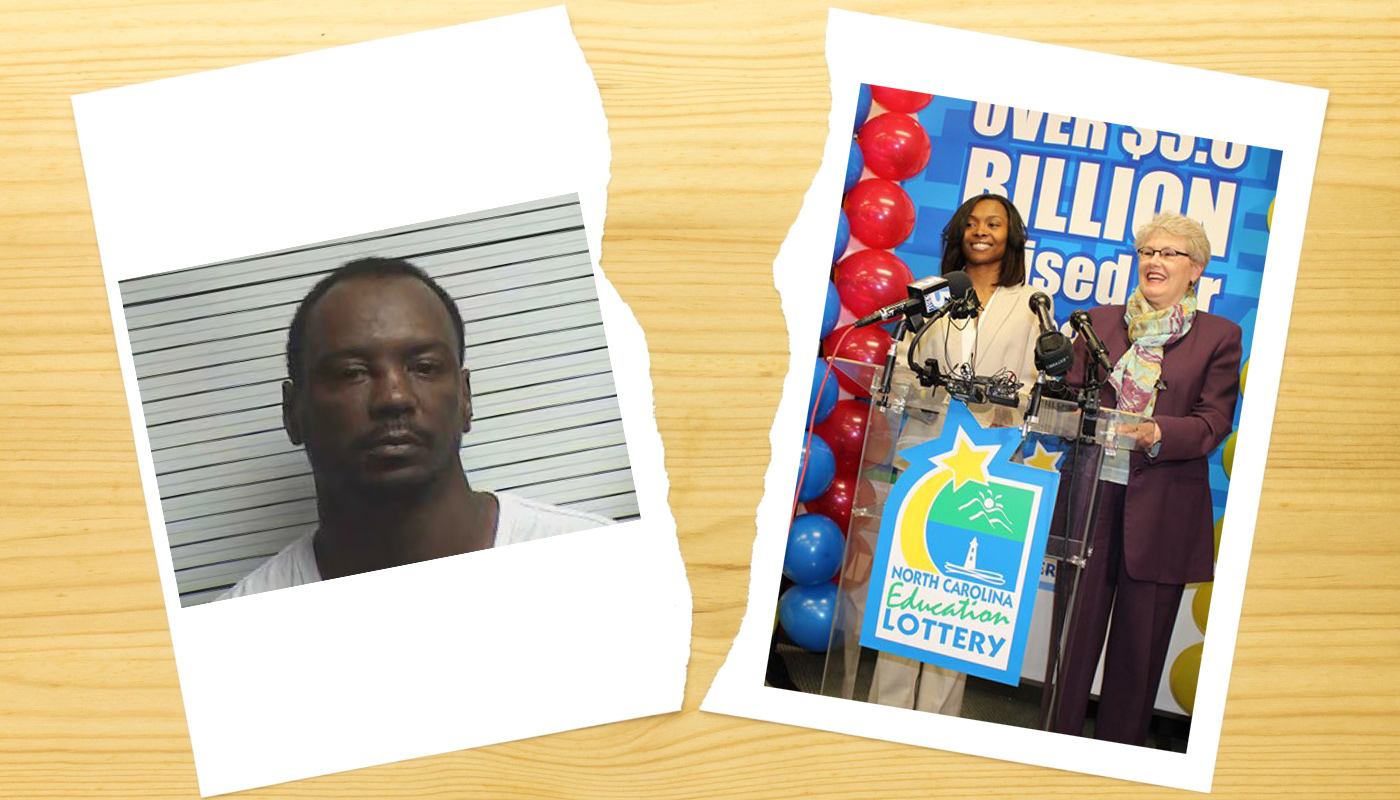
Most Powerball jackpot winners spend their money on luxurious new homes, expensive vacations, or fleets of new sports cars. North Carolina resident Maria Holmes seems to have spent most of her winnings bailing her former boyfriend, Lamar McDowell, out of jail.
Holmes split the February 11, 2015, $538 million Powerball jackpot with two other winners. After paying taxes and taking the lump sum payout, she collected $127 million. However, after the celebration ended, the drama began.
Shortly before Holmes's big win, police arrested McDowell on charges of heroin trafficking. Holmes paid his bail so he could be free pending his trial, but he was rearrested several times for violating his pretrial release agreement.
Because the court knew McDowell had access to Holmes's considerable funds, his bail was set at $1 million for his first offense, $6 million for his second, and a whopping $12 million for his third offense. In total, lawyers estimate that Holmes paid a bail bondsman $600,000 in deposits to keep her boyfriend out of jail.
Her generosity to her inmate boyfriend did not end there. In a later lawsuit, McDowell claims that Holmes spent millions of dollars on him, including $250,000 for a customized Chevrolet Stingray, $100,000 for clothes and jewelry, and $600,000 to help him start a car restoration business.
Despite his girlfriend's wealth, McDowell was convicted of drug trafficking, and in January 2016, a judge sentenced him to seven years in prison. At this point, the couple had two children together, but their relationship couldn't survive his incarceration, and a year into his sentence, Holmes told McDowell that she was breaking up with him.
Following the end of their relationship, McDowell filed a lawsuit against Holmes, claiming that she sold his property, including his clothes, car, and business, while he was locked up. The complaint reads:
“Each unauthorized gift, conveyance, or transfer of Mr. McDow's personal property was without his knowledge or consent and without consideration ceding to Mr. McDow... Ms. Holmes failed to act openly, fairly, and honestly by secretly giving away the items identified as Mr. McDow's personal property.”
McDowell asked the court to award him $1.4 million in compensation and damages. Holmes countered that all of the disputed property was legally in her name and she had the right to do whatever she wanted with it.
Ultimately, the court sided with Holmes and dismissed McDowell's lawsuit against her.
Moving on out
When Denise Robertson returned home from work in December 2017, she thought criminals had robbed her Ontario apartment because so many items were missing. Rather than a break-in, though, she was the victim of a breakup: her live-in boyfriend, Maurice Thibeault, had decided to end their relationship and leave the apartment without telling her.
Her sadness turned to anger when she learned the real reason he had left: he had won the lottery. Thiebeault was one of two winners of the September 20, 2017, 6/49 lottery jackpot, which was worth $12.2 million CAD.
He planned to collect his money and move on from his relationship with Robertson, but she wasn't willing to make it that easy for him. Robertson filed for an emergency injunction claiming she was entitled to $3 million CAD, half of his share of the lottery prize.
A judge issued the injunction, and instead of paying Thibeault the full amount of his win, the Ontario Lottery and Gaming Commission (OLG) paid out half of the prize and placed the remaining half under court control until the case was resolved. The agency stated:
"OLG has verified that the ticket in question was purchased by Maurice Thibeault and will proceed to pay him one-half (approximately $3.07 million) of the prize on or about Dec. 30, 2017. The other half of the prize, which is in dispute, will be paid into court in 45 days unless the parties resolve the matter privately or choose to take part in the Alcohol and Gaming Commission of Ontario's Lottery dispute arbitration process.”
Robertson's lawyer, Steven Pickard, told reporters:
"They shared everything. She's adamant and quite confident that she's entitled to her half. Despite the fact that he's going to get his half first, she doesn't think that changes her entitlement."
Robertson and Thibeault had lived together for over two years and were frequent lottery players. According to Robertson, she asked him after the drawing whether the disputed lottery ticket was a winner, and he lied, telling her it wasn't.
According to Thibeault, he was entitled to the full jackpot because he purchased the ticket with a debit card linked to his own personal bank account, and he and Robertson were not common-law husband and wife because they had not lived together for three years.
Thibeault had worked at a granite and glass supply firm, but he quit his job and left Robertson's home just a few days after his win. According to his friends, he had planned to end their relationship for months, and this jackpot merely expedited the process.
Take the money and run
Canadian couples seem to have problems sharing their lottery wealth, because here's yet another story of a disputed jackpot between two canucks who were lovers turned enemies.
Lawrence Campbell of Winnipeg thought he was having the best day of his life when he purchased a $12 Quick Pick for the January 20, 2024, Lotto 6/49 drawing. He lost the ticket at a friend's house but found it a few days after the drawing, scanned the ticket's barcode on his phone, and learned that he had won the game's $5 million CAD jackpot.
He shared the news with his then-girlfriend, Krystal Ann McKay, with whom he says he was “in a loyal, committed and promising romantic partnership”.
Campbell called his friends and family to tell them about his win, and he and McKay even visited a lottery retailer together to verify that his ticket was a winner on the store's ticket scanner. He was prepared to take it to the lottery office and collect his prize, but he faced one small problem: he had lost his wallet, which contained his ID.
According to Campbell, lottery officials couldn't issue him his prize without a government ID. However, they told him that McKay could publicly claim the prize, and they could send him the money later.
Campbell alleges that they concocted a story that he had purchased the ticket for McKay as a birthday present, even though that wasn't true. Further, he claims that he deposited the money into McKay’s bank account because he didn't have a bank account of his own.
The pair celebrated by renting a hotel room, but a few days into their partying, Campbell says McKay didn't return to the room and stopped replying to his calls and texts. He searched for her until he found her in the bed of another man.
According to his lawsuit, she told him that he was leaving him for the other man and had ghosted their relationship.
Campbell immediately filed a lawsuit against his former lover to preserve his fortune. On May 25, 2025, a judge issued a restraining order against McKay, preventing her from spending, investing, or gifting any part of the disputed lottery prize until the issue could be resolved in court.
Drop it like it's hot
Apparently, there's nothing like a big lottery win to make people in committed relationships think, “I could probably do better.”
This thought certainly occurred to UK resident Charlotte Cox after she won £1 million on an instant-win lottery ticket. A few weeks after collecting her prize, she told Michael Cartlidgeher, her boyfriend of a few years, to hit the bricks.
A heartbroken Cartlidgeher alleged that they had purchased the ticket together and he was entitled to at least half the proceeds, but Allywn, the organization that runs the lottery, determined that Cox was the game's sole winner and gave her the entire fortune.
According to Cartlidgeher, the pair had stepped out for dinner together when they stopped by a lottery retailer to pick up a couple of scratch-off tickets. While Cartlidgeher admits that Cox purchased and scratched the ticket, he claims that it was his idea to buy them and that he even attempted to transfer money to her for the transaction.
Speaking with reporters, Cartlidgeher said:
“I can openly admit that we wouldn't have got that ticket without Charlotte, but she wouldn't have got it without me either. I know it was her bank account that paid for it, but it should go 50-50, morally.”
While Camelot, the previous company to run the lottery, promised to look into the matter, it was only weeks later that Allywn became the new lottery operator, who promptly took Cox's side and awarded her all the money.
Soon, Cox was flaunting her new relationship with a man named Kyle East on social media, including showing off a new BMW she had purchased for him. They even attempted to open a catering business together, but allegedly, the burger van they bought broke down.
Nobody wins
Lynn Anne Poirier and Howard Browning were living together in Florida when they made a pact that if either of them ever won the lottery, they would split the prize. This was a significant promise because the pair were major lottery players who purchased tickets as often as possible and even drove to other states to play lotteries not available to them in Florida.
On June 7, 2002, the pair, who were both 53 at the time, stopped at a local convenience store where they each purchased entries into the Firecracker Millionaire Raffle. Browning states that they returned home and placed their ticket on the fireplace mantel.
Browning says that Poirer never returned home after the raffle's July 4 drawing. Concerned, he checked the tickets on the mantel and noticed that one was missing. He would later learn that the ticket was a winner and that Browning had taken it without his knowledge, collected a one-time payout of $750,000, and disappeared.
When she returned a month later, Browning requested his half of the prize, but Poirier refused to give it to him, and he sued her for it.
Poirier offered a much different account of what happened. She claims that the pair had broken up well before she purchased the ticket and that she was living with her mother at the time. She says that while she did see Browning at the time she bought the ticket, it was just a coincidence, and their verbal agreement was no longer valid.
She also argued that the agreement itself was no longer valid because it had been made 14 years earlier. Under Florida law, oral contracts must be put in writing after one year to remain enforceable.
While Poirier initially enjoyed favorable rulings, Browning eventually won a new trial on appeal, and in this final judgment, the judge ruled in his favor and awarded him $291,000.
Unfortunately for Browning, he may never see a penny of that cash because Poirier claims she has already spent it and filed for bankruptcy in 2016.


















Comments