
News writer, Interviewer

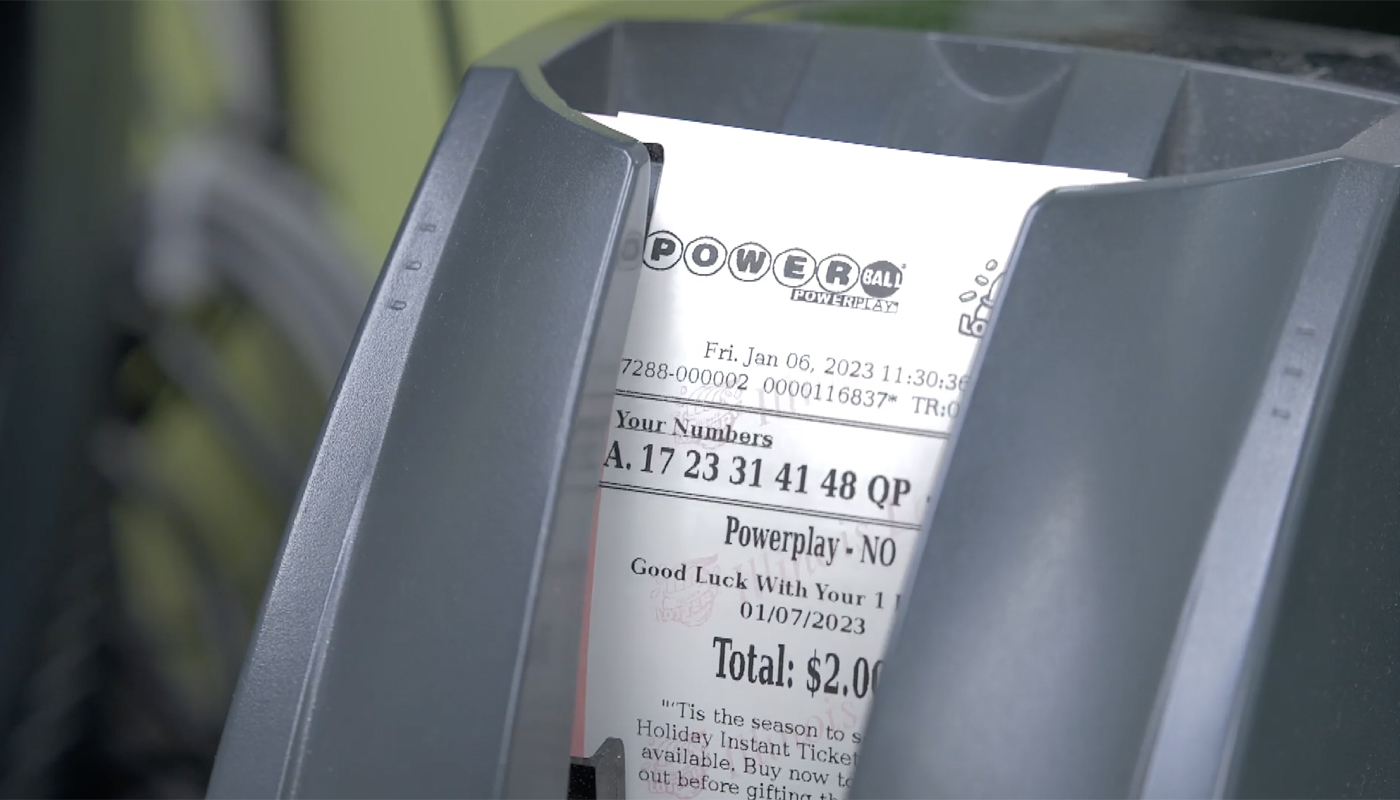
What would happen if Powerball expanded beyond American borders to become a truly global phenomenon? I've been thinking about the potential impact of lottery expansion across three English-speaking countries, and the results reveal fascinating possibilities for jackpot sizes, winning odds, and the entire lottery ecosystem.
Disclaimer: This article is not an endorsement of any international lottery expansion plan or political proposal. It simply examines hypothetical scenarios and their potential impacts on the Powerball lottery system.
The 51st state scenario
Recent political discourse has introduced an unusual possibility into public conversation. In April 2025, President Trump made a statement on Truth Social as Canadians headed to their national election, urging them to "vote for the man" who would make Canada the 51st U.S. state.
Setting politics aside, this scenario presents an interesting case study for lottery analysis. Canadians already demonstrate significant interest in Powerball, particularly when jackpots reach headline-grabbing amounts. During a $1 billion jackpot in July 2023, a store manager at Hardwicke's Country Store in Calais, Maine, reported selling over $450 worth of Powerball tickets in just half a day. Bill Kilby, whose store sits directly on the U.S.-Canada border, said:
Pretty much everybody that's coming through the door today is buying one. It's a billion dollars, so everybody wants a ticket.
If Canada were integrated into the U.S. system, our calculations indicate we would see $1 billion jackpots approximately once every 1.2 years on average, more frequently than current patterns. Canadian participation would immediately boost the player pool, with about 46% of Ontario adults currently active lottery players. Nationwide, nearly two-thirds of Canadians aged 15 and older reported gambling at least once in 2018.
The tax implications would simplify considerably. Currently, Canadians winning U.S. lotteries face withholding taxes and complex paperwork. As part of the U.S., these complications would disappear, though new state-level tax considerations might emerge depending on how provinces were incorporated into the American system.
The UK-Australia expansion plan
Beyond hypothetical political integration lies a more practical possibility that was actually under consideration. In 2020, amid pandemic-related sales challenges, the Multi-State Lottery Association (MUSL) revealed they were in discussions with Australia and the United Kingdom about potential Powerball expansion.
Missouri Lottery Director May Scheve, a MUSL board member, stated directly:
The game is hurting, and it's the most profitable product. We're working very hard and thinking of new promotions for the game. Powerball is a very strong brand. We want more people to play, and adding population is one way to do that.
These weren't merely speculative discussions. They represented actual conversations happening at the highest levels of lottery administration. While the pandemic temporarily shelved these plans, the concept remains viable.
If such an expansion occurred, our analysis shows that $1 billion jackpots would appear approximately once every 1.3 years on average. The Powerball player pool would grow by about 39% compared to the current U.S. market. Most notably, if a jackpot were won, there would be roughly a 28% probability that the winner would come from one of these non-U.S. countries.
Population impact by the numbers
To understand the scale of this potential transformation, consider the population figures:
- United States: 346,888,550
- United Kingdom: 69,464,792
- Australia: 26,919,317
- Canada: 40,046,109
Combined, these three additional countries would add millions of potential players to the Powerball ecosystem. But raw population figures tell only part of the story—lottery participation rates vary significantly across cultures:
- In the U.S., approximately 50% of adults buy lottery tickets at least once annually.
- In the UK, about 44% of respondents reported playing National Lottery games in 2019/20.
- In Australia, 64% participated in lotteries within a 12-month period.
- In Canada, approximately 65% of Ontario adults purchased lottery tickets in a year.
Regional variations exist within countries as well. Newfoundland and Labrador demonstrate particularly strong lottery enthusiasm, with residents spending nearly $415 million through Atlantic Lottery from April 2023 to April 2024. As Patrick Daigle, CEO of Atlantic Lottery, notes:
"Newfoundland and Labrador definitely skews a little bit higher. We see the propensity to play is a little bit greater there."
The ripple effects
Adding three countries to Powerball would create several significant changes to the lottery's dynamics:
Accelerated jackpot growth
A larger player base would mean substantially more tickets sold per drawing. This would directly translate to larger jackpots growing at faster rates, potentially leading to more frequent record-breaking prizes that capture global attention.
Changed winning probability
With more tickets in circulation, the mathematical probability of someone winning in any given drawing increases. However, the substantially increased ticket sales would likely counteract this effect, pushing average jackpot sizes upward despite more frequent wins.
Cross-border participation patterns
Massachusetts demonstrates disproportionately high lottery revenue for its population size, partly because residents of neighboring states cross borders to purchase tickets there. Similar cross-border behaviors might emerge in international settings, particularly near borders or transportation hubs.
Administrative reconfiguration
The current Powerball system carefully divides revenues: 50% toward game prizes, 35% to causes supported by the lottery where the ticket was sold, 6% for retailer commissions, and 9% for operating expenses. An international structure would require thoughtful reconfiguration of these allocations to accommodate multiple national systems.
Is this realistic?
While political integration scenarios remain highly unlikely, international lottery expansion represents a more plausible possibility. The lottery industry actively seeks growth opportunities, with the North American market projected to grow by $40.7 billion during 2023-2028, achieving a compound annual growth rate of 4.48%.
The Western Canada Lottery Corporation recently celebrated its 50th anniversary, demonstrating the longevity and stability of lottery systems in the region. In its half-century, WCLC's sales have topped $38 billion, with winners taking home more than $19 billion.
Meanwhile, American lottery participation demonstrates considerable regional variation. New York led the nation with approximately $8.87 billion in lottery sales in 2022, followed closely by California ($8.85 billion), Florida ($8.8 billion), and Texas ($8.3 billion).
The COVID-19 pandemic forced Powerball to eliminate guaranteed minimum jackpots and minimum increases between draws. This adaptation demonstrated the game's vulnerability to economic disruptions, making international expansion potentially attractive as a risk diversification strategy.
The bottom line
While politicians probably won't redraw national boundaries for lottery convenience, and regulatory hurdles remain substantial, the international Powerball concept offers a fascinating glimpse into lottery evolution.
For players, it means potentially larger prizes appearing more frequently. For lottery administrators, it represents untapped markets and pandemic-proof resilience. For governments, it means fresh revenue streams for public programs.
The next time you're standing in line, clutching your Powerball ticket and dreaming impossible dreams, consider that your competition for the grand prize might someday include a teacher from Manchester, a surfer from Brisbane, and a hockey fan from Toronto—all united by the universal language of "what if?"
After all, as Bill Kilby from that Maine convenience store wisely noted: "You can't win if you don't have a ticket." Soon enough, that simple truth might echo across three continents.















Comments