
News writer; Opinion columnist

With sales revenues of almost $100 billion and games offering jackpots worth over ten figures, the United States lottery is a massive business. However, unusual for an industry of its size, it's also an extremely local one.
American lotteries offer thousands of different games, but only five, including Powerball and Mega Millions, are available in more than one state, and until a few months ago, none of them were available to players in other countries.
But could that change?
With the expansion of Powerball to the UK, at least one major lottery game has gone global, and it may not be the last. More customers means more money for state lottery organizations and potentially bigger jackpots for players, so could we see more games go abroad?
Some lotteries are definitely trying.
Here’s how we see the future of global lotteries.
Vikinglotto
To understand the future of international lotteries, it's important to consider their past. While lotteries date back thousands of years, international cooperation in modern lotteries is relatively new.
In the early 1990s, Nordic countries, including Norway, Sweden, Denmark, Finland, and Iceland, faced a serious financial problem. Although these countries had their own authorized lotteries, the prizes were relatively small because their low populations couldn’t support the massive jackpots players in France, Germany, and the UK were used to.
As a result, they lost customers and money to larger foreign lotteries that could attract players looking for higher-stakes games. To protect themselves, they created one of the first modern international lotteries, the Vikinglotto.
Launched in 1993, Vikinglotto was a weekly draw game in which participating countries pooled their ticket sales to offer bigger jackpots than any one could offer individually.
Creating the game was far more complicated than picking numbers from a drum and selecting a winner. Rather than being regulated by a single entity, each country maintained its own unique lottery organization, all of which had to coordinate standardized rules, regulations, and a jackpot that needed to be paid out in five different currencies.
Despite the early challenges, the game was a success, and over the years, other countries joined, including Estonia, Latvia, Lithuania, Slovenia, and Belgium.
To date, the game has created thousands of millionaires and paid out billions in prizes, proving that countries can cooperate to run lotteries across borders.
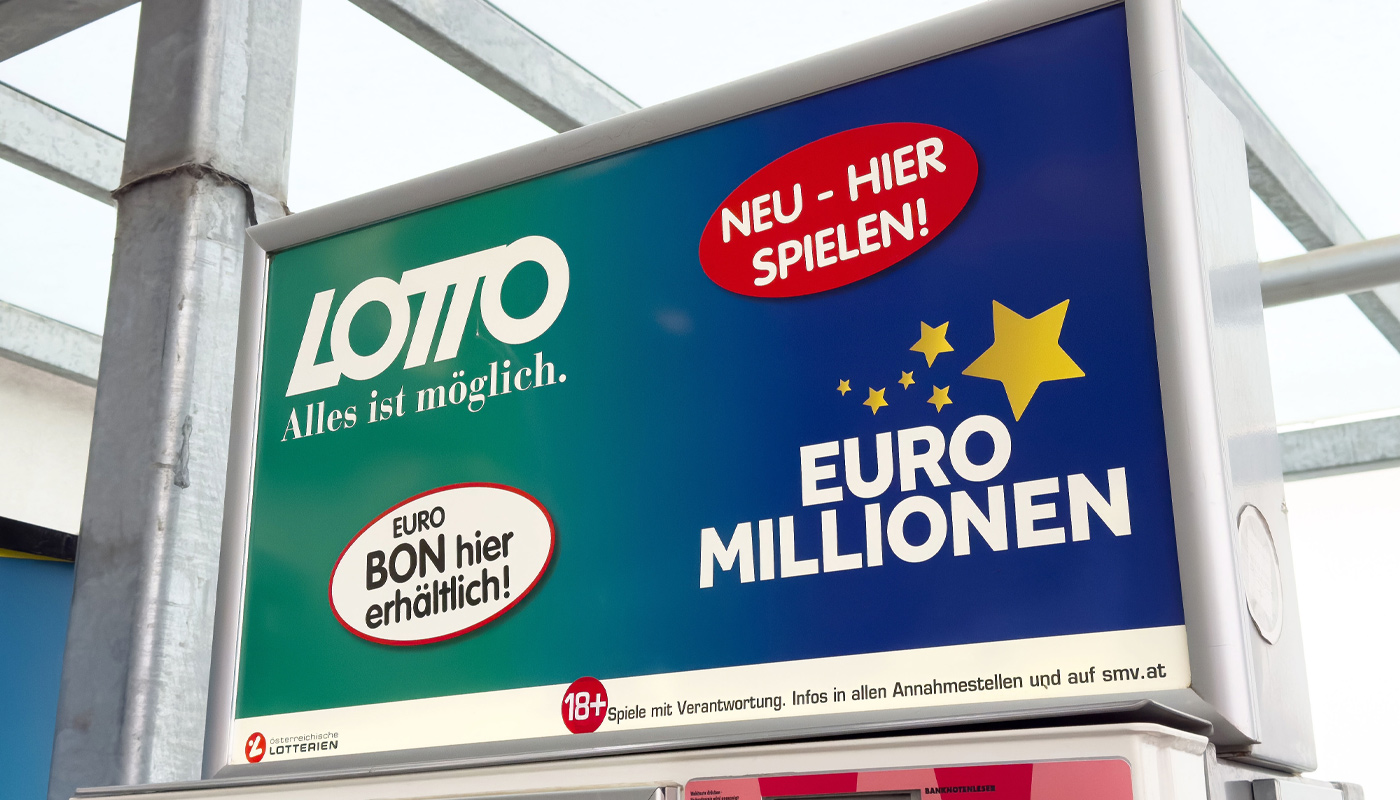
EuroMillions
While Vikinglotto was intended to help smaller countries protect themselves from larger ones, EuroMillions was intended to bring Powerball-sized lottery jackpots to European players.
The game launched when France’s national lottery operator, La Française des Jeux (FDJ), formed an agreement with Camelot, the UK’s biggest lottery operator, to run an international lottery between the two countries.
The FDJ has previously tried to create international lotteries involving up to a dozen countries, but the coalitions always failed because coordinating so many nations proved too complicated. In 2001, the FDJ changed its strategy and reasoned that if it created an international lottery with Camelot, one of the largest lottery operators in Europe, other countries would want to join the partnership.
The strategy was successful, and Spain joined the coalition before the first game even launched.
They settled on a draw game in which players had to select five numbers between one and fifty as well as two lucky star numbers between 1 and 9.
The first drawing was held on February 13, 2004, in Paris, featuring a jackpot of 15 million euros. Amazingly, a player in France won on the first draw, and the game was born.
The game's success was so immediate that within eight months of its launch, Austria, Belgium, Ireland, Portugal, Switzerland, and Luxembourg all joined, and the jackpots quickly grew larger.
In 2005, ticket sales exploded when Dolores McNamara of Ireland won over 115 million euros, the largest lottery jackpot in European history at the time.
The game's success and its super-sized jackpots were crucial to reviving the UK lottery. The UK lottery was wildly popular when it launched in 1994, but by the early 2000s, sales were down, and interest in the game was lagging.
However, ticket sales skyrocketed as Euromillions gained popularity, and its success helped spur the creation of more multinational lottery games in Europe, such as Eurojackpot and Eurodreams.
Launched in 2012, Eurojackpot is nearly identical to EuroMillions, except it is available in a different set of countries, including Germany, Sweden, Denmark, the Netherlands, Italy, and a dozen others.
Eurodreams, which had its first drawing in 2023, is another international lottery but offers a different payout structure. Instead of giving the winner one massive jackpot, Dreams offers winning players 20,000 euros a month for thirty years.
The game is available in nine countries, including France, Spain, Portugal, Ireland, and Austria.
All three games are among Europe's most popular lotteries.
Caribbean SuperLotto
Of course, the Europeans aren’t the only ones who have figured out the power of international lotteries.
Lotteries are a strong part of Caribbean culture, but the small populations of individual nations mean that the jackpots are minor compared to what American players are used to. To make their games more enticing, eight different countries came together to form the Caribbean SuperLotto, a biweekly draw game.
Jamaica, Dominican Republic, Barbados, Anguilla, Antigua and Barbuda, St. Kitts and Nevis, St. Maarten, and the U.S. Virgin Islands are the original members, and the game offered a starting jackpot of $2 million, which was huge compared to what the islands could offer individually.
Although the jackpot is smaller than the European international games, the game offers better odds than most other draw games.
Players must select five numbers between 1 and 35, plus a Superball between 1 and 10. The odds of winning the top prize are 1:3.2 million, compared with EuroMillions, where the odds are 1:139 million.
Unlike EuroMillions, which was an immediate hit, SuperLotto struggled to find an audience. Partly because tickets were more expensive than standard regional lottery tickets, but even more so because no one won a jackpot in the game's first year of drawings, and the rules were repeatedly revised to make the odds more enticing.
Finally, after thirteen months, a player in St. Maarten won the game’s first jackpot, worth $5.4 million. The publicity from this payout created growing interest in the game, and it eventually expanded to more countries, including Paraguay and Bermuda, although the Dominican Republic dropped out in 2015.
Powerball in the UK
While international lotteries have existed for decades now, the United States has largely avoided expanding its games beyond its borders for mostly practical reasons.
With a massive population, American games didn’t need more players to hit billion-dollar jackpots, and there was no need to protect the domestic market from foreign games that are largely unplayable in the U.S.
That all changed in April 2026 when MUSL announced that Powerball would expand to the UK. While most international games began as collaborations between multiple countries, Powerball was already an established game seeking to grow its market.
The change was sparked when Allywn took over British lottery operations from Camelot in 2024. Allywn had a mandate to grow lottery revenue, and they saw importing Powerball, which offered larger jackpots than any other British game, as a way to spur player interest in new games.
From MUSL’s perspective, expanding the game made sense because adding more players meant jackpots could grow faster, and Powerball always sells more tickets for bigger jackpots.
The first Powerball drawing UK players could buy tickets for was worth 300 million pounds, the largest jackpot in British lottery history.
Although it's too early to judge Powerball's success in Europe, early indications suggest it's popular and contributing to faster jackpot growth.
Cross-border lotteries
The Ontario Lottery is trying an entirely new strategy to bring international players into its games. While most international games result from cooperation between different nations, Ontario wants to allow foreign players to compete in online games, such as poker, that are based entirely in Canada.
Under the new rules, foreign players couldn’t participate in Canadian lottery games yet.
The system works by having players in Ontario connect with pools of international players who can access the Canadian games through their own websites. Interestingly, players located in other Canadian provinces would not be allowed into the games.
Whether that can actually happen remains to be seen, since the Atlantic Lottery, BCLC, and Manitoba Liquor & Lotteries sued Ontario in Canada’s Supreme Court, arguing that allowing foreign players into Ontario games is a direct violation of Canadian gaming laws, which allow each province to regulate games that take place entirely within its own borders.
The Ontario Lottery argues that it would still manage and operate the game even if it allowed foreign players to participate.
While the court has not yet ruled, if the Ontario Lottery is successful, it could open up a whole new world of cross-border gaming because allowing players digital access to existing games would not require agreements or cooperation with other governments or foreign lottery organizations.
Will we see more international games?
Powerball is the first American game to go overseas, but will others follow? As of this writing, there have been no further announcements, but if UK Powerball is a success, it wouldn’t be surprising to see more MUSL games follow its lead and expand into new territories.
A lottery's job is to sell tickets, and adding millions of new customers is an easy way to do that, but does expanding games into new countries actually benefit U.S. players?
There are two ways to look at it. First, adding more players can definitely make jackpots grow faster. However, there’s also a flip side: with more players in the pool, jackpots can be won faster, meaning they won’t have as much time to grow to mammoth proportions.
So if U.S. games can go to Europe, should we expect to see any European games in America? My guess is probably not. It’s clear what Powerball can offer other countries: bigger jackpots. It's not clear what games like EuroMillions can offer American players other than another game to play.
Rather than create new players, a new European game would likely cannibalize money spent on American games, and given how dependent state budgets are on the millions of dollars the lottery generates, losing any of that money to a foreign lottery operator would likely be a non-starter for any state lottery director.
So if you’re hoping to play Euromillions or Eurodreams anytime soon, you’ll probably need to buy a plane ticket.