
News writer; Opinion columnist

We spoke with Arizona Lottery Director Alec Thomson to learn more about the state’s record year of sales, plans for celebrating the lottery’s 45th anniversary, and the most important ways the lottery benefits the state.
Q: How are you celebrating the Arizona Lottery’s 45th anniversary?
A: We wanted to generate excitement about both the new games and the 45 years, so we infused $4.5 million into our in-state lotto, The Pick jackpot. That was really exciting—to see that kind of renewed engagement in one of the Arizona Lottery’s first games.
Beyond that, we have a Country Cash promotion going on right now featuring Dierks Bentley. That event will happen next year and will include a $45,000 game show, so one player could win up to $45,000. That will be held at Dierks Bentley’s bar out in Gilbert, Whiskey Row.
A couple of other things: We have a Bring It Back activity on AZ Players Club, so we’re inviting players to vote on an old scratch ticket to bring back, and we’ll be running that next year.
We hosted a couple of community events and celebrations. We held a press conference to talk about the impact of the Lottery over the years and celebrate that, as well as a player-driven event at a retailer called Bull Shooters in North Phoenix.
There’s a lot going on. We really wanted this year to highlight not just a record-breaking sales year—one where a lot of states are seeing slowing sales—but also record-breaking impact for the state of Arizona. We’ve officially crossed the $6 billion milestone in returns reinvested in Arizona communities.
Q: How have you managed so much success when other states are struggling?
A: Since I came in, I’ve said we really have to focus on the core. We know 70% of our revenue comes from scratch tickets, so we need to ensure we’re optimizing the category. We need to make sure we’re launching tickets at the right cadence and doing everything we can to optimize our field operations—getting out-of-stocks down and working closely with retailers to understand the product and the importance of new-game activations.
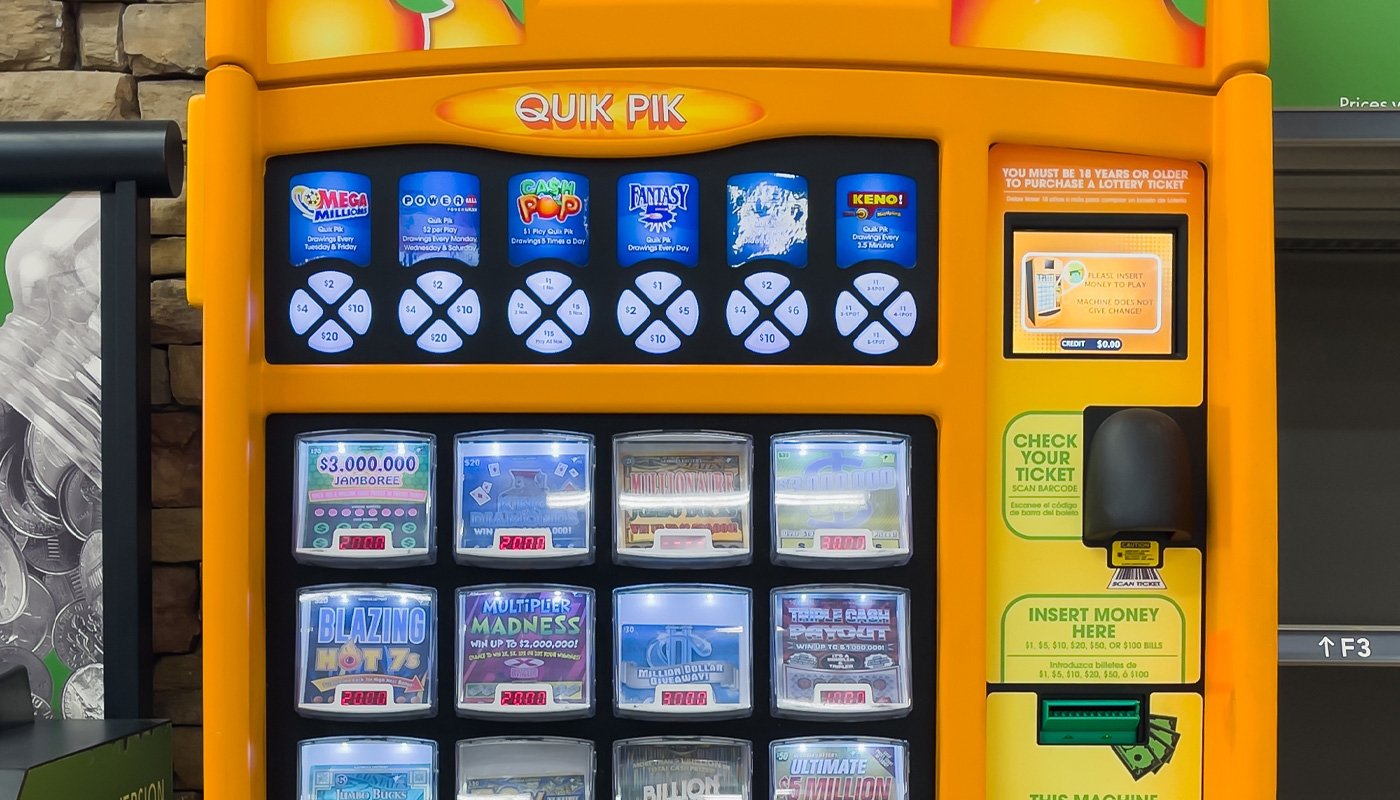
Beyond that, we’ve invested a fair amount in retail itself. That includes digital menu boards: We’ve partnered with Circle K to deploy a little over 250 digital menu boards, which have been a huge help in an automated-checkout world.
We’re partnering with Kroger to double-up vending in some of their high-volume stores with a new 40-bin vending machine. It’s a combination of all these field-optimization efforts, investment in new technology, and, of course, the right mix of products that are getting people excited.
Q: You mentioned that 70% of your lottery sales come from instant-win games. What is your process like for developing and releasing new games?
A: We’re releasing anywhere between three and five scratch tickets a month, often along with a Fast Play ticket. It varies depending on the season. In September, leading into the holidays, you’re going to see a much bigger launch. I think we’re looking at about seven new scratch games in September because you have the seasonal ones along with the typical launches.
We know that new games sell better, especially with players who are coming back. They want to try something new every once in a while. They might be an avid crossword player, but they might add on that new product every time something launches.
It’s about keeping that cadence for them, but also engaging the more casual player. That’s where some of those licensed properties come in. We’re looking at Godzilla right now and a couple of other ones.
Lady Luck is a fan favorite. That one is coming out with a revised look this year because it was so popular. Then we have some licensed properties driven by in-state brands, which I think is interesting.
Q: You’ve recently lowered the odds on The Pick (Arizona’s in-state draw game) to 1-30. Has that had an impact on sales?
A: The sales indicate players like it. The goal is to eventually reach faster-growing jackpots, as most draw games do when they raise the price, while also getting those better odds. We want the in-state lotto to be the first choice in a lot of cases—or that first add-on when the jackpot is up, and Powerball is rolling, and you’re getting excited about that.
Q: You recently worked with Scientific Gaming to upgrade the technology behind your gaming systems. Can you tell us about what kind of improvements they’ve made and how they’ll impact players?
A: That system just went live in June. We’re operating on a more secure system; it allows for increased functionality and includes this upgrade to the draw-game portfolio: the addition of Pick 4, midday draws for both Pick 3 and Pick 4, updates to The Pick, and, eventually, the launch of the new multi-state NFL game (Powerball X’s and O’s).
As in any industry, we face risk, especially in a world that is increasingly digital-first. That makes it even more important for us to partner with Scientific Games—a global expert in lottery sales and lottery systems—because they’re really the ones we look to to protect the integrity of the game.
Q: For a long time, the only multi-state games were Powerball and Mega Millions. Recently, we’ve seen the introduction of new games such as Millionaire for Life and Powerball X’s and O’s. Why are we suddenly seeing so many more new multi-state games?
A: There has been an ongoing feeling by many states, including myself, that we need to do more to keep people engaged. We can’t rely on jackpot chasers to continue driving lottery growth.
By introducing these new concepts that appeal to very different audiences, you’re increasing chances to win, increasing revenue that goes back into communities, and keeping the lottery relevant in an increasingly competitive gaming world.
With sports betting, I think the NFL Powerball Xs and Os ticket is a great match for that kind of player. Millionaire for Life appeals to a more Millennial audience, maybe an older Gen Z audience. This is broadening the reach of the portfolio.
That’s what we’re also doing locally here in Arizona with some of the numbers games, adding those midday draws. We’re trying to work away from, “It’s a good year if you get five jackpots.” If you get one jackpot, we’ll take it, but we don’t want to expect or rely on that revenue. We want to diversify the portfolio.
Q: In 2025, you had a Mega Millions jackpot winner worth $100 million. Can you talk about what it's like when someone walks into your office with a nine-figure ticket?
A: It’s a pretty robust validation process, as you can imagine, especially when you’re working with a multi-state product. This one specifically was unique in that it was sold by a lottery courier, so they had their own process of notifying the player. The player decided not to come in person and instead gave his attorney power of attorney. From there, that whole validation process started.
Q: Courier services have been a controversial topic in the industry. Some states ban them, and others have embraced them. What has your experience been like with courier services?
A: Their sales have more than quadrupled since I’ve been in the job. They are delivering a huge volume of sales for the state of Arizona, so I think I’d be crazy to say it’s not a net positive. We have not had a bad experience.
But we work with the retailer; we do not work directly with the courier. We are not one of the states with a regulatory framework. I would like to get that done at some point, but at this time, we’re not moving forward on regulation. We license the retailer, and we tell players that we’re not directly affiliated.
People are craving the ease of that purchase. In a state where you don’t have iLottery, it breaks down that barrier for someone who might be elderly and can’t make it to the grocery store, or someone who drives an electric vehicle and isn’t going to the gas station.
Q: Another hot topic is lottery buyouts. We’ve seen a couple of them over the past few years. Is that something you protect against?
A: It is a pretty big priority. I take it pretty seriously. The typical player doesn’t have access to capital in that way, so it’s only fair that we monitor and restrict corporations' ability to come in and buy jackpots.
Granted, they are still taking a risk, and that’s the argument, but for the common player, we want to protect the integrity and fairness of that game.
We were one of the first states to take action on this by amending the rules of our existing games and adding rules to upcoming games that prohibit bulk purchasing. You can’t always get in front of it, but you can do as much as you can.
Our new system also allows us to monitor this more closely—to detect spikes in sales volume at any given retailer. We’re doing what we can to limit that. Even as a free-market-type guy, I still put the players first, and I don’t believe the majority of my players would think that’s fair.
Q: Do you have a favorite story of a player who you could tell their life was really going to be impacted in a positive way by winning?
A: I always go back to the first one after I took this job. I was maybe four months in, walking to the lobby. Our customer service lead at the time flagged me over and said, “Hey, come meet this player.”
The guy had a really great experience with our team, too, which makes it even better. He was out at Country Thunder and bought a Fast Play ticket from our ticket van, so he knew instantly that he had won $100,000. It was such a cool—I still get chills when I tell the story—it was such a cool experience to see his emotion when he came in to claim the prize the following Monday; he was just so truly emotional.
Out the door, he was looking at maybe $60,000 or $70,000, but he told us he was so excited to pay off his student debt. He had been wanting to start a business, but was kind of waiting for that to happen. So here you have a recent grad entrepreneur who just secured capital to start his own business. I think that is a real-life story. We all want that big $2 billion jackpot, but these small prizes—I’ll tell you, $70,000 would make a big difference in my life.
Q: How does the state of Arizona benefit from the lottery? I know many states tend to focus on one issue, such as education, but here you spread the money around more.
A: When voters created the Lottery 45 years ago, they gave us a mandate to generate revenue for public benefit. That is our mission and our primary goal every day, with every product and everything we do. We’ve given back over $6 billion to the state in the Lottery’s history.
We’ve made our environment cleaner. We’ve invested in the environment and in attracting new businesses to the state that are strengthening our economy. We’re investing in higher education, building campuses that educate the next generation of Arizonans. And we’re investing in homelessness, health, and human services.
We are a unique lottery in that we have 17 different beneficiaries, whereas a state like Georgia is investing in the HOPE Scholarship. That said, we are still making a big difference, and there are tangible examples of that. Not to mention that, especially in a year like this year or next, where your state budget is shrinking, we’re part of what’s keeping taxes down. We’re part of what’s keeping services alive. It’s that overall broad impact.
Q: Do you have a personal favorite project that the lottery helped fund?
A: I live in downtown Phoenix, and the new biomedical campus used by all three state universities is about half a mile from me. Every time I walk through there, I think, “Wow, this was made possible by lottery dollars,” because the universities used lottery bonding to build those campuses. The fact that there’s only one medical school in Arizona and we desperately need another one—that is made possible by lottery dollars—I think that’s something really impressive.
We thank Director Thomson for taking the time to speak with us.
Lottery numerology predictions
Every week, we bring you the most up-to-date astrological forecasts for all signs of the zodiac.