
News writer

Psychology gives us insights into everything we do, from the day-to-day decisions we make to long-term plans for the future. It can help us understand our behavior and learn more about why we do the things we do, which can be particularly helpful if we want to break a habit or try something new.
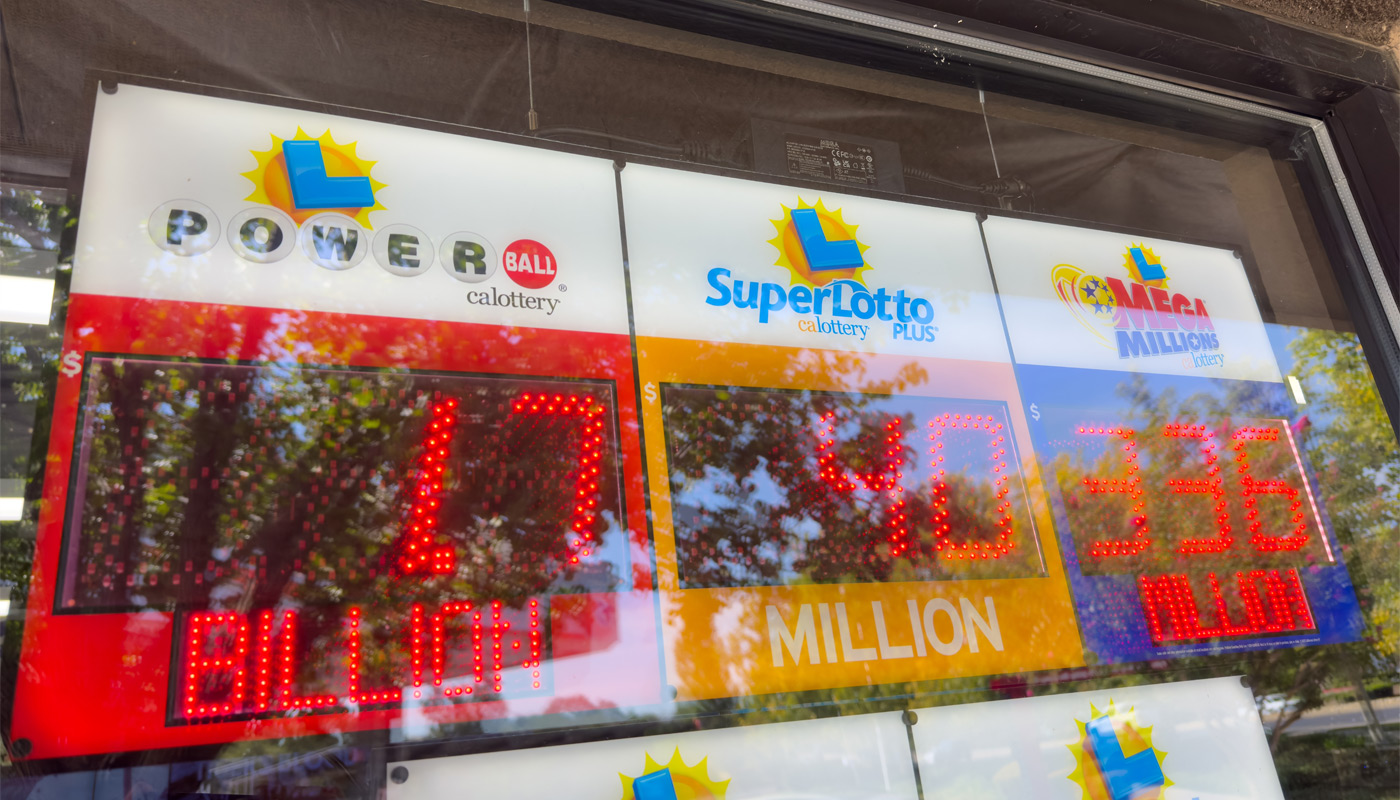
The odds of taking home a Powerball jackpot is around 1 in 292.2 million. The odds of winning Mega Millions are around 1 in 302.6 million. Despite these incredible odds, millions of people continue to play the lottery even though they may never win. This suggests that there's more to playing the game than just the money. So, what can psychology tell us about what's going on in our brains when we play?
The dream of instant wealth
Just about everyone has, at some point, dreamed about winning the lottery, what they would do with the money, and how it would change their lives. The allure of sudden wealth is intrinsically linked to our desire for security and a successful life. This makes it a powerful draw to the lottery's dream of financial freedom achieved in just one small turn of events.
The dream is enhanced when we see and hear of previous lottery winners and their stories about how their newfound fortune has made their lives better, earned them social standing, and brought them happiness. These images reinforce our idea that we, too, can achieve this dream by playing the lottery.
Risks, rewards, and dopamine
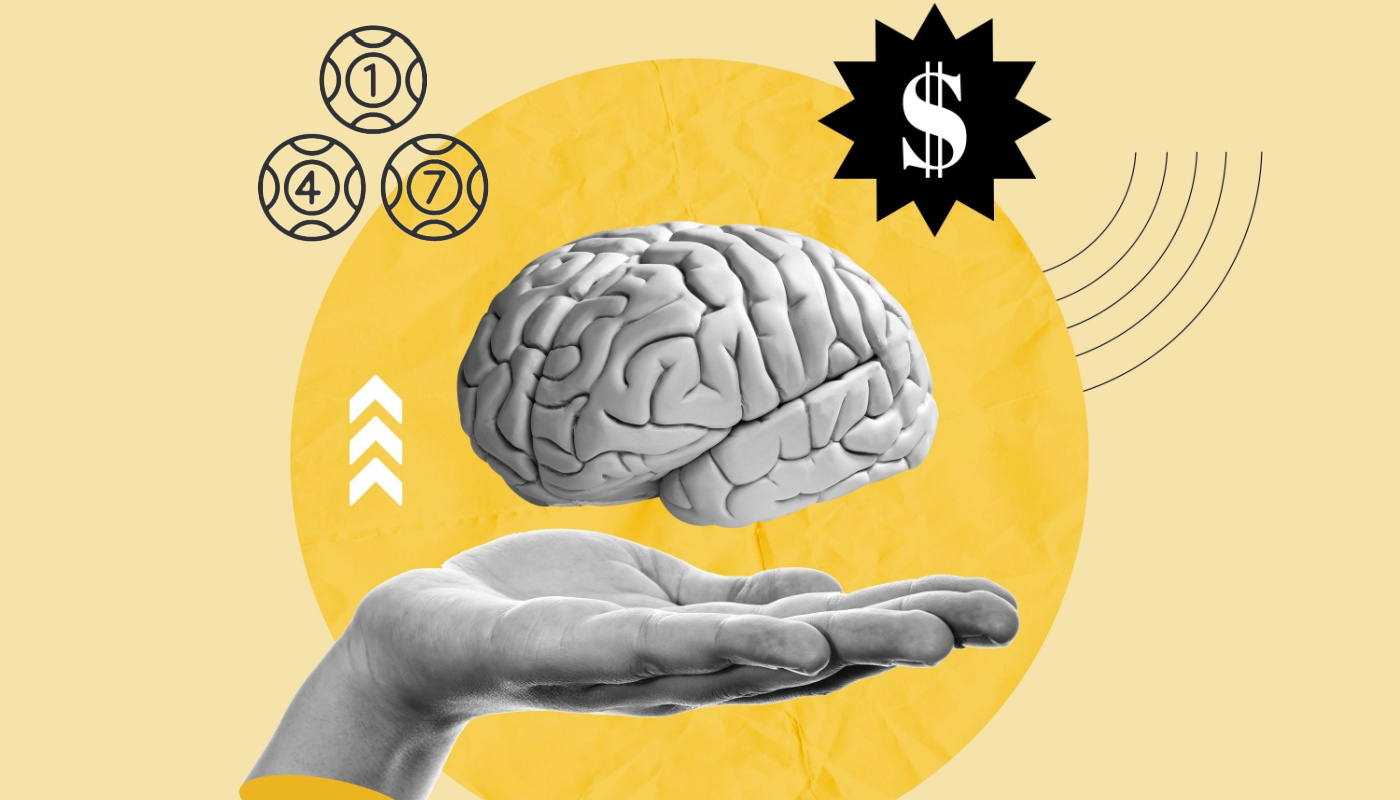
According to the field of psychology, one key to understanding why we keep coming back to play the lottery lies in what's known as the pleasure principle. The term, coined by the psychoanalyst Sigmund Freud, refers to the instinctive drive in all of us to seek pleasurable activities and avoid painful ones. When we participate in a pleasurable activity, this triggers the release of a neurotransmitter called dopamine. Dopamine plays an important role in motivation, satisfaction, and learning.
When you do something that makes you feel good, such as playing the lottery, the level of dopamine in your brain increases, and it acts on areas of your brain that make you feel pleasure and satisfaction. This can be another reason why we want to play the lottery again, even though we may be no closer to winning.
Brains are bad with big numbers
Although there is much that we do not know about the human mind, we do know that it has difficulty wrapping itself around large numbers. When it comes to the lottery-sized odds and probabilities, which are in the hundreds of millions, these numbers are almost impossible to conceptualize.
How can you possibly visualize the odds of 1 in 292.2 million? Steven Bleiler, a mathematics and statistics professor at Portland State University, Oregon, has come up with a thought experiment to help you. It goes like this:
Image a swimming pool 120 feet long, 40 feet wide, and 5 feet deep. The pool is completely filled with M&Ms. Among the mass of rainbow candies is a single green M&M. The odds of you winning the Mega Millions or Powerball jackpot is about the same as you wading into this swimming pool blindfolded and picking out the single, green M&M.
Gambler's Fallacy
Added to the fact that we have incredible difficulty conceptualizing the large numbers involved in the odds of winning a jackpot lottery is the fact that we are also vulnerable to what's known as “gambler’s fallacy.” This neat little term refers to the belief that recent happenings can change the odds of things happening, even though those things have a fixed probability.
It sounds irrational, and it is, but we have all succumbed to it at some time or other. For example, you toss a coin, and it lands on tails five times in a row. You may be inclined to think that next time, it will land on heads, even though there is still a 50/50 chance of the coin landing on either heads or tails. Similarly, playing the lottery is an independent event with a fixed probability, so no matter how often a series of numbers are drawn, they’re just as likely to be drawn in the future. What this means is that paying the same numbers each week makes no difference to your odds of winning.
We were so close, let's try again
Often, almost winning gives us a strange urge to try again. It's as though a near miss indicates that we're getting closer to winning, which, of course, it doesn't. But when we come close to winning in some games, like baseball or soccer, a near miss can give us the edge of encouragement we need. Of course, this is only useful in skill-based games, which the lottery is not. Nevertheless, when we play the lottery and get 3 or 4 out of 6 numbers right, we sometimes take this as a 'sign' that we should carry on. This is because a near miss triggers the same area of the brain as a success.
Why we like to believe in good luck
Many people believe in luck, both good and bad. But, a belief in good luck can make us feel stronger and more in control when we are faced with randomness. What's important to remember is that our mindset is a powerful thing and can influence our reality.
A study conducted by researchers from Columbia University and UCLA discovered that a person's beliefs about luck fall into one of two camps: fleeting or stable. The latter group includes those who believe that they are generally lucky or generally unlucky. The former group includes those who consider luck to be fleeting and unpredictable.
The interesting part of this research is that it shows that there is a strong relationship between a person's belief in luck and their motivation to achieve a goal. People who feel lucky feel more in control and able to persevere toward goals, whereas people who believe that luck is random are likely to be more skeptical about achieving their goals.
The undeniable entertainment factor
One of the most important points when it comes to understanding the psychology of playing the lottery is that many people realize that even though buying a ticket holds little or no financial value for them, it does have entertainment value. While the majority of lottery players are unlikely to make a profit from playing the lottery regularly, they can enjoy the thrill of the possibility of winning. Others may also enjoy daydreaming about obtaining instant wealth. When played responsibly, that in itself could be the cost of a ticket or two.
Let's hope you're feeling lucky next time you play. Have fun playing the lottery, and remember to play responsibly.









Comments