
News writer

Remember when buying a scratch-off ticket meant spending a dollar or two at the gas station? Maybe you'd win $10. Maybe you'd lose. Either way, you had a little fun without spending much money. Those days aren't completely gone, but scratch-off tickets have gotten a lot more expensive.
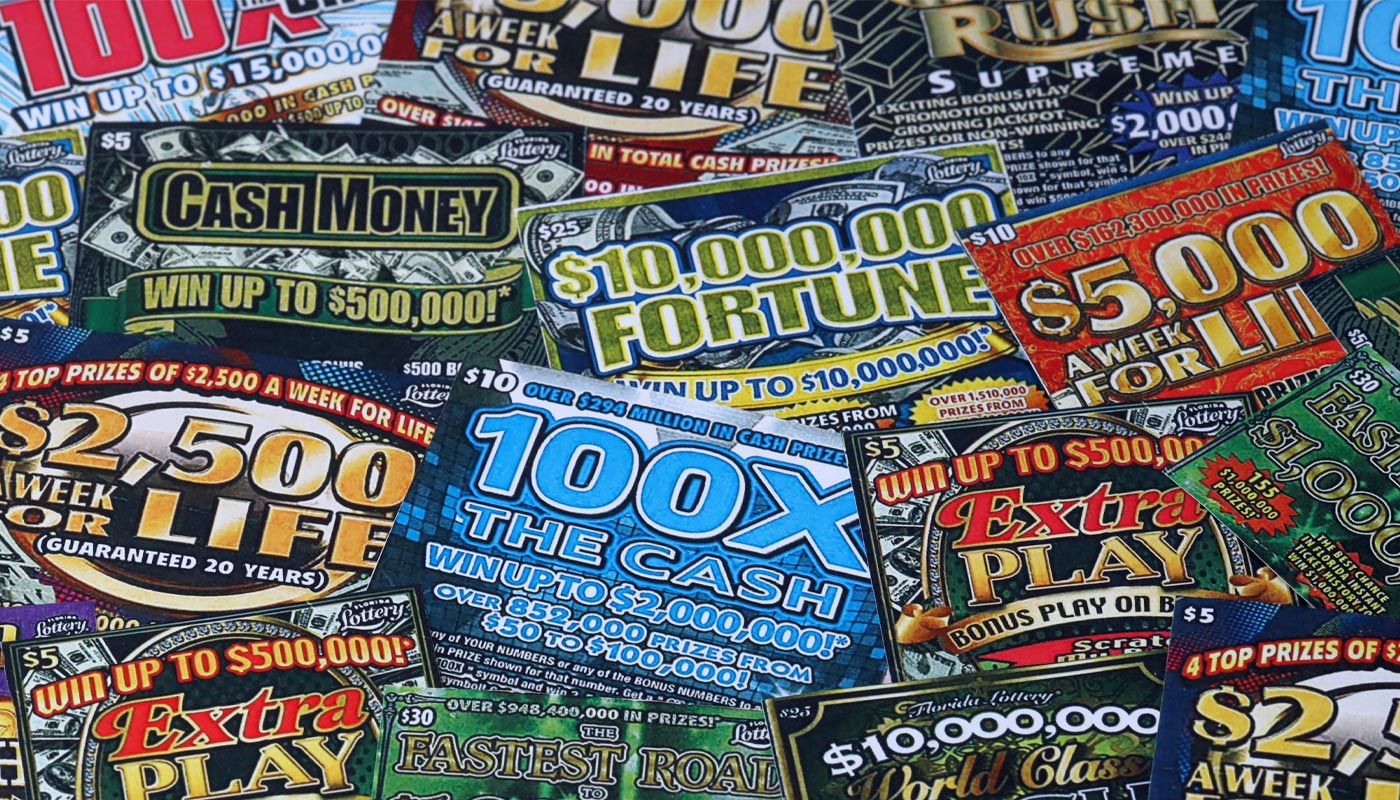
Walk into a convenience store today, and you'll find tickets selling for $20, $30, $50, and even $100. That's a lot of money to spend on something you might throw in the trash two minutes later.
Think about what $100 buys these days. You could go out for dinner, pick up groceries, or put gas in your car. Or you could buy one scratch-off ticket and lose every penny. Sure, you could win millions. That's the appeal. But are these expensive tickets really giving players a better chance to win? Or have lotteries figured out that people will spend more if the jackpot is big enough?
How did scratch-offs get so expensive?
Scratch-offs weren't always this pricey. For years, they were a cheap way to have a little fun without waiting for lottery numbers to be drawn.
Then, lotteries started offering more expensive games. First came $10 tickets, followed by $20 and $30 games. Eventually, $50 tickets started showing up with multimillion-dollar prizes.
Texas took things even further in 2022 when it introduced “$20 Million Supreme,” a $100 scratch-off with a $20 million top prize. Florida has offered $50 tickets with jackpots reaching $25 million, while Pennsylvania has also sold $50 games.
It's easy to see why these tickets attract attention. Put a $20 million jackpot next to a $5,000 prize, and plenty of people will be tempted to spend more. But just because the jackpot is bigger doesn't mean you're getting a better deal.
What does spending more actually get you?
There's a pretty big difference between spending $1 on a scratch-off and spending $100.
Here's what players can generally expect at different price points.
| Ticket price | What players typically get |
|---|---|
|
$1 |
Smaller prizes, but an inexpensive way to play. |
|
$5 |
Bigger prizes without spending too much. |
|
$20 |
Larger jackpots, but more money at risk. |
|
$50 |
Multimillion-dollar prizes and sometimes better odds. |
|
$100 |
Huge jackpots and often higher payout percentages. |
More expensive tickets generally have better overall odds of winning something. A $1 ticket might have odds around 1 in 4.5, while a $50 game could offer odds closer to 1 in 3.
That sounds like a pretty good improvement until you look at what counts as a win. Spend $50 on a ticket and win $50? Congratulations, you've broken even. Spend $100 and win $50? You're still out $50, even though the lottery counts your ticket as a winner.
That's something players need to pay attention to. A game advertising odds of 1 in 3 doesn't mean you have a 1-in-3 chance of walking away with more money than you spent. And when you're paying $100 for a ticket, that distinction matters.
Do expensive tickets offer better value?
One advantage of expensive scratch-offs is that they often have higher payout percentages. The payout percentage tells you how much of the money spent on a game goes back to players through prizes.
For example, a game with a 60% payout returns an average of $60 in prizes for every $100 in ticket sales. An 80% payout returns $80.
That doesn't mean you'll personally get that money back. It's the average across the game. A third-party analysis of Texas scratch-offs from October 2026 found some interesting differences.
| Ticket price | Average overall odds | Average payout |
|---|---|---|
|
$1 |
1 in 3.98 |
60.0% |
|
$5 |
1 in 4.08 |
67.1% |
|
$20 |
1 in 4.00 |
74.6% |
|
$50 |
1 in 3.49 |
78.0% |
|
$100 |
1 in 3.63 |
80.0% |
The $100 tickets have the highest average payout percentage. Sounds great, right?
Not so fast. A $1 ticket with a 60.1% payout has an average expected loss of about 40 cents. A $100 ticket with an 80% payout has an average expected loss of $20.
You're getting a better percentage back on the expensive ticket, but you're also risking a lot more money.
Here's something else that caught my attention. The $50 tickets in this comparison actually have slightly better overall winning odds than the $100 games.
So much for assuming the most expensive ticket is always the best one.
A bigger jackpot doesn't mean you're more likely to win it
Let's go back to that $100 Texas scratch-off.
The $20 Million Supreme game launched with four $20 million top prizes and overall odds of approximately 1 in 3.49.
Those odds might sound encouraging. But there were more than 10 million tickets in the game, and only four were worth $20 million. Your original chances of hitting that jackpot were roughly 1 in 2.6 million.
Florida's $50 500X THE CASH game offers another example. One version launched in February 2026 with a $25 million top prize and overall odds of 1 in 4.05.
Someone buying that ticket might see the jackpot and think they're getting a great opportunity to become a millionaire. The reality? Winning any prize and winning the jackpot are two completely different things.
I'd like to see lotteries make that distinction much clearer.
Lotteries are making serious money from these tickets
There's a reason lotteries keep introducing expensive scratch-offs. People are buying them. According to the Texas Lottery's fiscal year 2023 report, its two $100 scratch-off games generated a combined $574.8 million in sales. More than half a billion dollars from two games!
The report also showed that sales of $100 scratch-offs increased 172.2% compared with the previous fiscal year. With numbers like those, it's hard to imagine lotteries walking away from expensive tickets anytime soon.
And yes, lottery proceeds help fund education, veterans' programs, parks, and other public services. Those are good things. But I don't think that gives lotteries a free pass when it comes to encouraging people to spend more.
How much is too much to charge for a scratch-off? And should state lotteries be pushing tickets that cost $100 when so many people are already struggling with everyday expenses? Those questions deserve more attention.
Are everyday players getting priced out?
Nobody has to buy a $50 or $100 scratch-off. There are still plenty of cheaper games available. But I wonder whether these expensive tickets are changing how people think about playing. Say someone normally buys two $5 tickets every Friday. That's $10 for a little entertainment.
Then they see a $50 ticket advertising a $5 million jackpot.
Suddenly, those $5 tickets don't seem quite as exciting. Maybe they decide to spend $50 instead, figuring they'll have a better shot at winning something big.
But spending five times as much doesn't mean they're five times more likely to win a substantial prize. And if that $50 ticket loses, they've just spent what normally would have been five weeks of their lottery budget.
That's what bothers me about the push toward more expensive games. Players shouldn't feel like they need to spend $50 or $100 just to have a worthwhile lottery experience.
Why aren't lotteries clearer about the odds?
Look at the front of almost any scratch-off ticket. You'll see the biggest jackpot advertised in huge letters.
What you probably won't see displayed nearly as prominently is your chance of winning more than you paid. Those details are often buried in prize tables on lottery websites. Why make players do all that homework?
I'd like to see every scratch-off clearly display three things: the overall odds of winning, the odds of winning more than the ticket price, and the percentage of sales returned as prizes. That would make it much easier to compare games.
There's also the issue of remaining prizes. Some scratch-offs stay on sale even after their biggest jackpots have been claimed. Lotteries generally publish remaining-prize information online, but how many people check before buying?
And even when a top prize is listed as unclaimed, someone could already be holding the winning ticket. Players deserve to know what prizes might still be available without having to dig through a lottery website.
Have scratch-offs gotten out of hand?
I'm not saying lotteries should ban $50 or $100 tickets. If someone can afford one and enjoys playing, that's their decision.
But where does it stop? Would a $200 scratch-off be reasonable? What about $500? At some point, we're getting pretty far away from the idea of buying a cheap ticket for a few minutes of entertainment.
I'd rather see lotteries put more effort into making affordable games attractive instead of continually pushing ticket prices higher. Give players decent prize structures at lower price points. Make the odds easier to understand. And stop making the biggest jackpot the only thing people notice.
I understand why someone would spend $100 on a ticket offering $20 million. Who wouldn't love to win that kind of money? But most people aren't going to win millions. Most won't even make back what they spent. And there's a big difference between losing $1 and losing $100.
Expensive scratch-offs can offer better payout percentages and sometimes better odds. That's fair to acknowledge. But that doesn't automatically make them a smart purchase.
For someone who enjoys playing occasionally, a $5 ticket might be a much better choice than a $50 game, even if the cheaper ticket has worse odds.
I don't have a problem with lotteries selling $100 scratch-offs. I have a problem with players being led to believe they need to spend that much to have a decent chance at winning.
Scratch-offs became popular because they were a cheap, fun way to try your luck. There's no reason that has to change. And if lotteries are going to charge $100 for a ticket, they should make it as easy as possible for players to understand exactly what they're buying.
Enjoy playing the lottery, and please remember to play responsibly.